Samuel Hereford Parkins
///sector.runs.battle
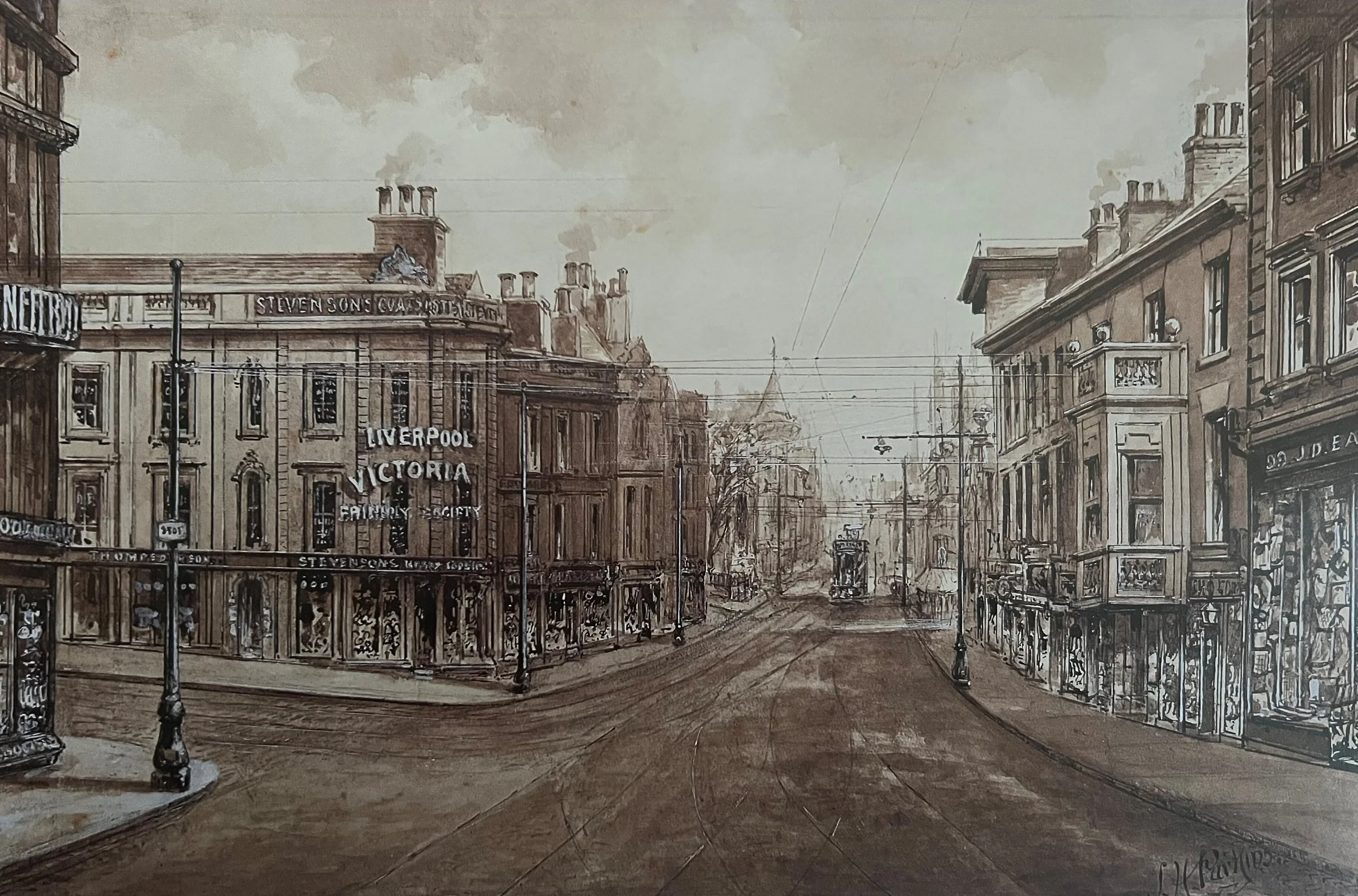
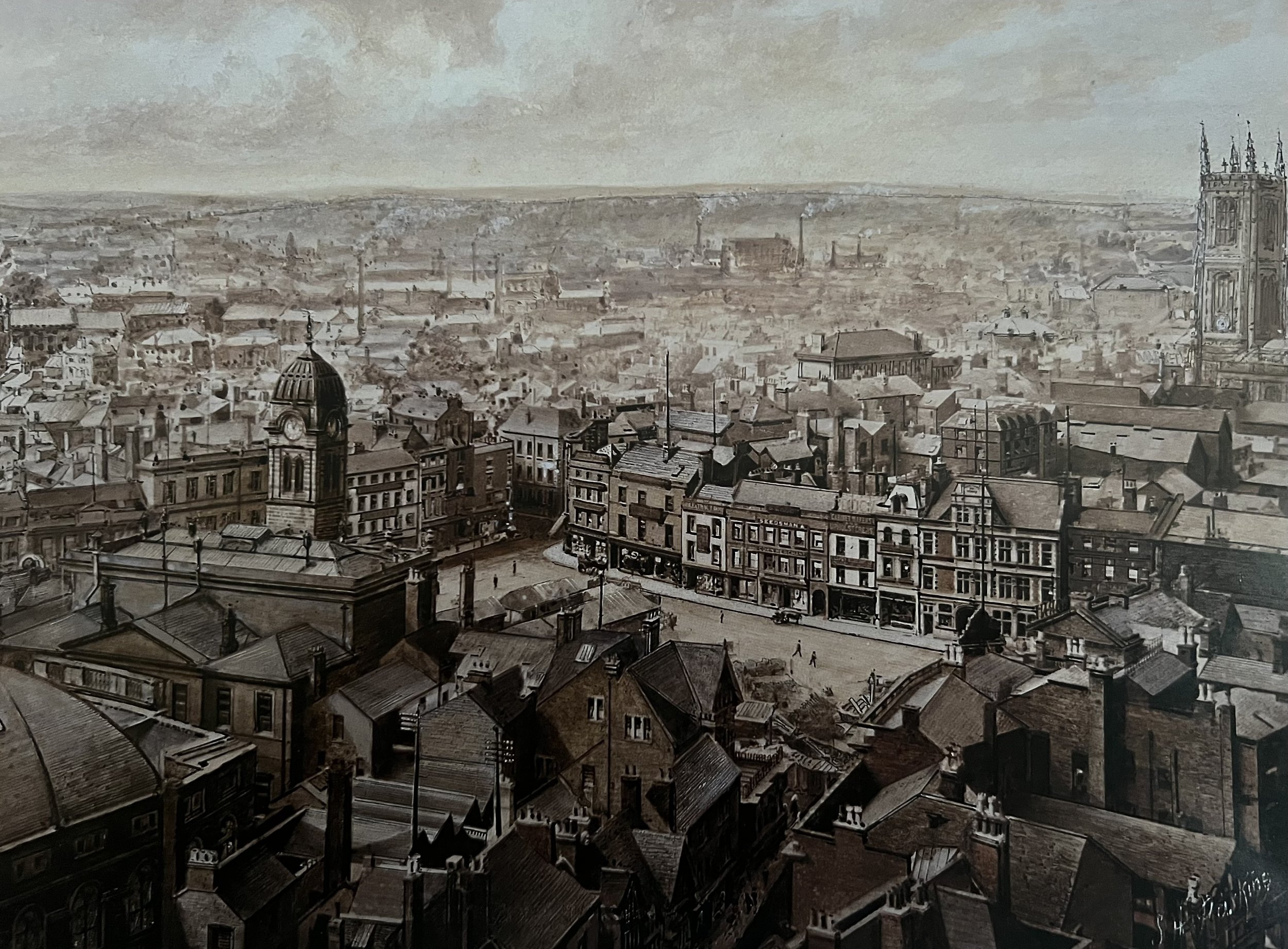
In 1936, the Derby Museum and Art Gallery received a collection of over 500 paintings of various Derby scenes. The paintings were given by Alfred E. Goodey, a collector of paintings, prints and photographs, and included the work of artists such as Alfred John Keene, Ernest Townsend, Ernest Ellis Clark, C.T. Moore and S. H. Parkins.
Little was known about S.H. Parkins.
A Derby Evening Telegraph newspaper article from October 12, 1945 had the headline: “We forgot a man who drew forgotten Derby”. It seems, that even as far back as then, the identity of S.H. Parkins was a mystery. The article ended with an appeal to the newspaper’s readers for any information they might have.
It was just four days later that the readers answered a great deal about that identity.
The follow-up article revealed that it was a “Mr. Parkins” so that was the gender solved. He had, it seemed, died around twelve years prior to the article and it went on to explain that he had moved to Derby from London in 1900. The reason for the move, was for him to do “a couple of days work” for Messrs. Bemrose and Sons, however he ended up staying there as an employee for 25 years!
Expanding further, it detailed how he had lived on Arboretum Street, and that he’d previously been the assistant editor of a Sunday paper and spent a lot of time in Paris devoting his spare hours to art. He was referred to by people who had met him as a ‘very small, quiet and most lovable man’ and invariably wore a silk hat and frock coat and was a ‘fine old Victorian character’. It was Alfred E. Goodey himself that had commissioned him to do his paintings of Derby.
The 1911 Census revealed that Samuel Parkins was living at 34 Arboretum Street, Derby.
Other family history searches reveal that Samuel was born around 1849 and had lived in Marylebone, London. He had been married twice. The first marriage was to Amelia, who died around 1887, and the second to Maria, who had been living with him in Derby. She was herself from Paris, perhaps meeting Samuel when he spent time there. As well as Arboretum Street he’d also previously lived at 47 Rosehill Street.
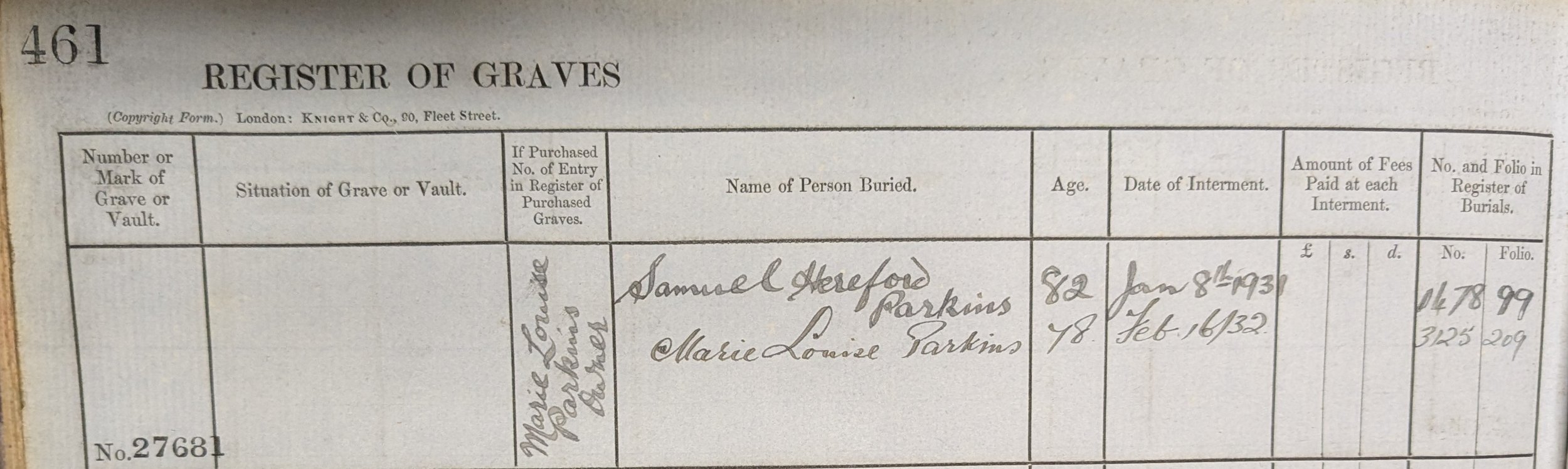
The last mystery remained as to what the H stands for. According to the 1921 Census it stands for “Henford”, but it could also be read as “Hereford”. The cemetery burial record finally revealed the name was indeed “Hereford”.
You can’t take anything with you when you die. What you can be, and should be, is remembered, and we are happy that Samuel Hereford Parkins can now be remembered properly.
Samuel died 1st January 1931 and is buried in plot WKA4/ 27681.