Samuel Lander Hough
///tune.fire.clever

Samuel Lander Hough was born on April 7th, 1848, in Ford Street, Derby to Joseph a wheelwright and Sarah (nee Lander).
In 1850 he emigrated to the United States with his family, a journey that apparently took 32 days to cross the Atlantic, where upon arriving they settled in Brooklyn. By 1860 the Hough’s had relocated to Jefferson township, Morris County , New Jersey. Joseph was a farmer with an estate valued at $2500 dollars. Joseph’s personal wealth amounted to $800 dollars, plus his family had also grown with three the birth of American-born children; Lucy, Sarah and Jane.
Service records show that Sam enlisted in the 2nd New Jersey Cavalry on September 8th, 1864, in Morris Town. He was just 16 years 5 months and 1 day old. However, in similar fashion to many other teenagers of the time he lied and told recruiters he was 18. As an outcome of enlisting he received a bounty of $100.00, the equivalent of $2,057.63 today.
Stories suggest that he fought at the Battle of Gettysburg but this was in early July 1863.
On June 29th, 1865, Sam mustered out of the regiment at. Vicksburg, Mississippi and returned home to his family. He apparently spent time as a lumberjack near Michigan. Research has determined he went into business as a trunk and carpet bag manufacturer with New Yorker Abraham W Thompson. Abraham who was 10 years Sam’s senior, their business was located in Market Street, New Jersey.
According to an article in the Derby Evening Telegraph, after the Civil War Sam became a lumberjack in Michigan, “100 miles from civilisation. He worked in the wilds for two years felling pines and still recalls many happy hours spent round the campfires in the evening. The danger of an attack by Red Indians, however, made it necessary him to be fully armed, and Mr. Hough can tell stories which would thrill any young devotee of Buffalo Bill. .
In January 1872 the New Jersey business was amicably dissolved and Sam returned to Derby, where he joined a firm of Coopers; the Hill Brothers. He married into the family business when he wed Henry Hills’ daughter Sarah Ann Hill in 1874. The couple had 3 sons: Samuel, Henry and John. Within a year of Johns birth, Sarah died, and Sam had to adapt to life as a widower.
In April 1881 he lived at 20 Ford Street, employed as a Coopers labourer. In July 1881 he married Fanny Williams, a widow and the younger sister of his late wife Sarah. The marriage lasted for a decade until 1891 when sadly Fanny also passed away.
In 1892 a third wedding took place for Sam when he married Elizabeth Beecroft. The couple had two sons.
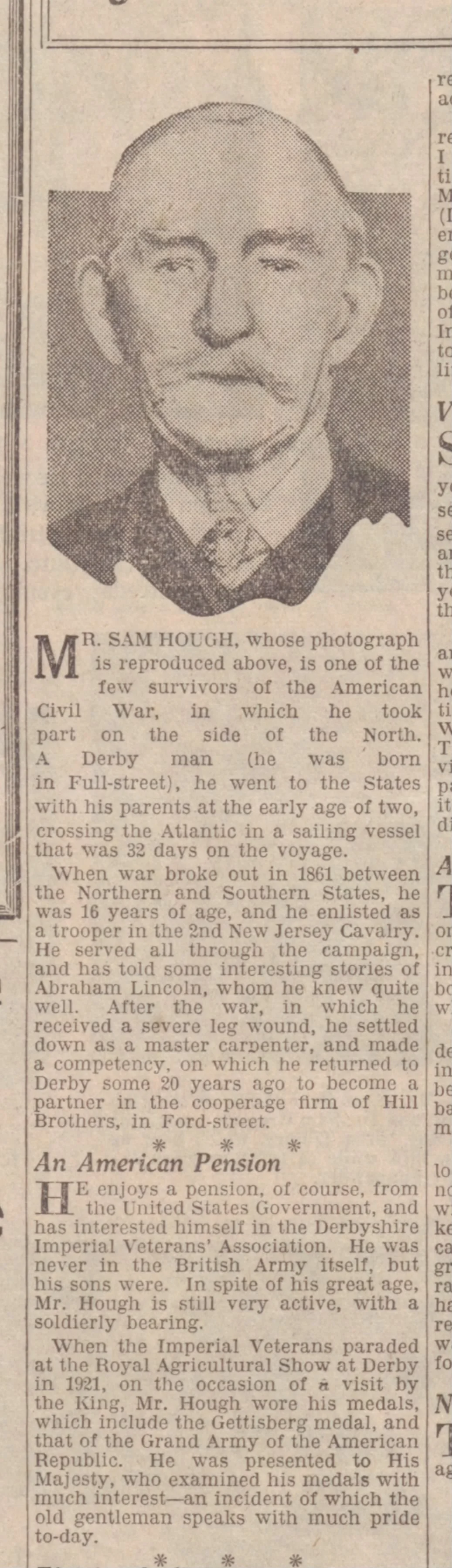
Sam became involved in civic affairs. By 1896 he was general manager of Henry Hill’s cooperage in Ford Street. He also became Vice-President of Derby’s Imperial Veterans Association and featured in numerous newspaper articles. He was described as “a good friend” to the old soldiers. He apparently had a jaunty air and a prominent hat to match his presence according to the Derby Daily Telegraph, “One of Derby’s oldest inhabitants, and in his way one of the most interesting, is Mr. Samuel Hough, who recently celebrated his 90th birthday” observed one of their reporters, “I had a chat with him yesterday at his home in Heyworth Street, and although time is beginning to tell on him, he can be delightfully reminiscent. He was born in Ford Street, where his father was a wheelwright and he was only two years old when the family immigrated to America. His life in the states, which was very eventful, is what he is ever ready to talk about, especially the party played in the Civil War.
In order to join the Northern army, he was obliged to make himself out to be three years older than he really was, namely 18 instead of 15. He was posted to the New Jersey Cavalry and was present at some of their more important engagements, amongst these was the Battle of Gettysburg, which some historians declare was the bloodiest of the campaign.
Certainly, Mr Hough has a good cause to remember. For he was badly wounded in the right leg, and the effects of this injury are troubling him to this day. ‘I can't get about as I would like’, he says that he is somewhat lame just now. Those who remember him with his Buffalo Bill hat, and his jaunty air would never suppose that he once stopped a bullet.
Mr. Hough has several souvenirs of the American Civil War, including battle prints of Gettysburg, and of the surrender of Robert E. Lee's forces at which he was also present. Another reminder is a certificate from the state of New Jersey thanking him for his services as a soldier.
He returned to England soon after the war and entered into business as a cooper in Derby with Messrs. Hill brothers, into whose family he married. He has been living in retirement, happy in the care of his garden, and the company of his friends. The United States government has not forgotten the veterans who fought in the war, and from that quarter, he is in receipt of a quite good pension. A few months ago he was invited to attend a rally of these old soldiers in America and the authorities at Washington are prepared to pay his expenses from Derby and back again. ‘If I had been a little younger’, Mr. Hough told me, ‘ I should certainly have gone, but I had to decline’”.
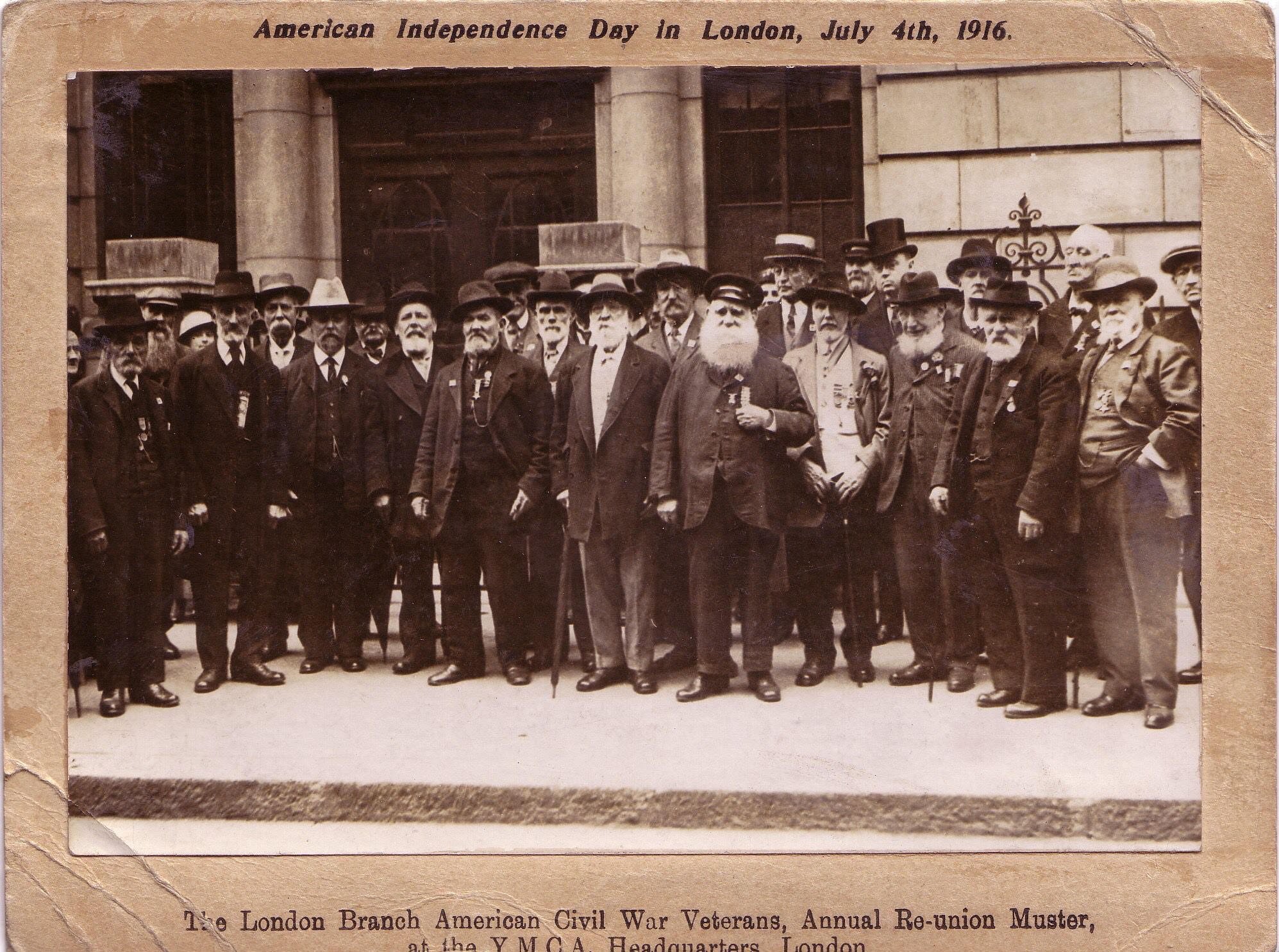
By 1916 Sam had joined the ranks of the London Branch of American Civil War veterans and became their 124th member. He was present when the men celebrated July 4th at the YMCA in Tottenham Court road. At these reunions the old veterans jabbered and figuratively fought their Civil War battles over again. Sam was no different, claiming that along with service at Egypt Station , he saw action at Gettysburg where he had been injured in battle. Nobody ever seemed to question the claim and took it at face value. However, that historic action was fought in July 1863, suggesting his claim was perhaps a yarn, fathoms long’. John Davis, founder of the London Branch often observed that when the old bluecoats gathered, some tall tales were told. Even if prone to some story-telling a testimony to Sam’s good character is that he paid for his friend Henry McGuinness’ funeral in November 1916. He was no stranger to covering expenses where needed, he had undertaken to cover the costs of decorating a model of the London cenotaph presented to the Imperial Veterans association.
In June 1921 King George visited Derby for the Royal Show. Dignitaries and old veterans gathered to greet the Royal family, and Sam was one of them, “A further veteran to hold conversation with the Royal visitor was Mr. Samuel Hough who served the Northern Army during the American Civil War 1861-5” observed the Derby Evening Telegraph. “ He is a native of Derby, and returned from America, where he went as a youth, some 40 years ago. He was attached to the New Jersey Cavalry and served at Gettysburg. The King asked Hough which side he fought on. and he replied, ‘On the side of victory’, the apt answer causing his Majesty to smile”. Seven years after making his quip to King George Sam hit the press again when he was included in a list of surviving London Branch members published by Arthur WF Smith (80th New York), the honourable secretary of the organisation. There was known to be just 11 men left on their roll which had once numbered 146 veterans. With the passing of Charles Wright (USS Vandalia) in 1933, Sam became their last remaining member.
One can only wonder how Sam felt knowing he was among a unique and ever decreasing number of Civil War veterans. When German bombs dropped on British city’s at the outbreak of WW2, did he reflect back to his youth armed with cutlass and carbine at Egypt Station? The world and warfare had seen so many changes in eight decades. Sadly he would not see the wars conclusion as he died aged 92 on December 26th, 1940. Nor would he have likely known of his important position in the story of the Civil War. Tragically his death also passed without any reference in the press or to the particular distinction of being most likely the last Civil War veteran to die in the United Kingdom with verifiable service.
After his internment there was no name, remembrance of life nor service rendered inscribed upon a marker above his grave. He was interred at Nottingham Road cemetery in the grave of his infant son Geoffrey Beecroft Hough who died in 1899. When his widow Elizabeth died in 1944, she was buried in the same grave. With the passage of time any intentions to place his name on a burial marker were overlooked, the life of the living taking precedence over the needs of the dead. Sam’s name became one of thousands lost among digitised and paper records of service. The pages of history shining light on his status as the last soldier remained blank, bare, and never considered; until now.
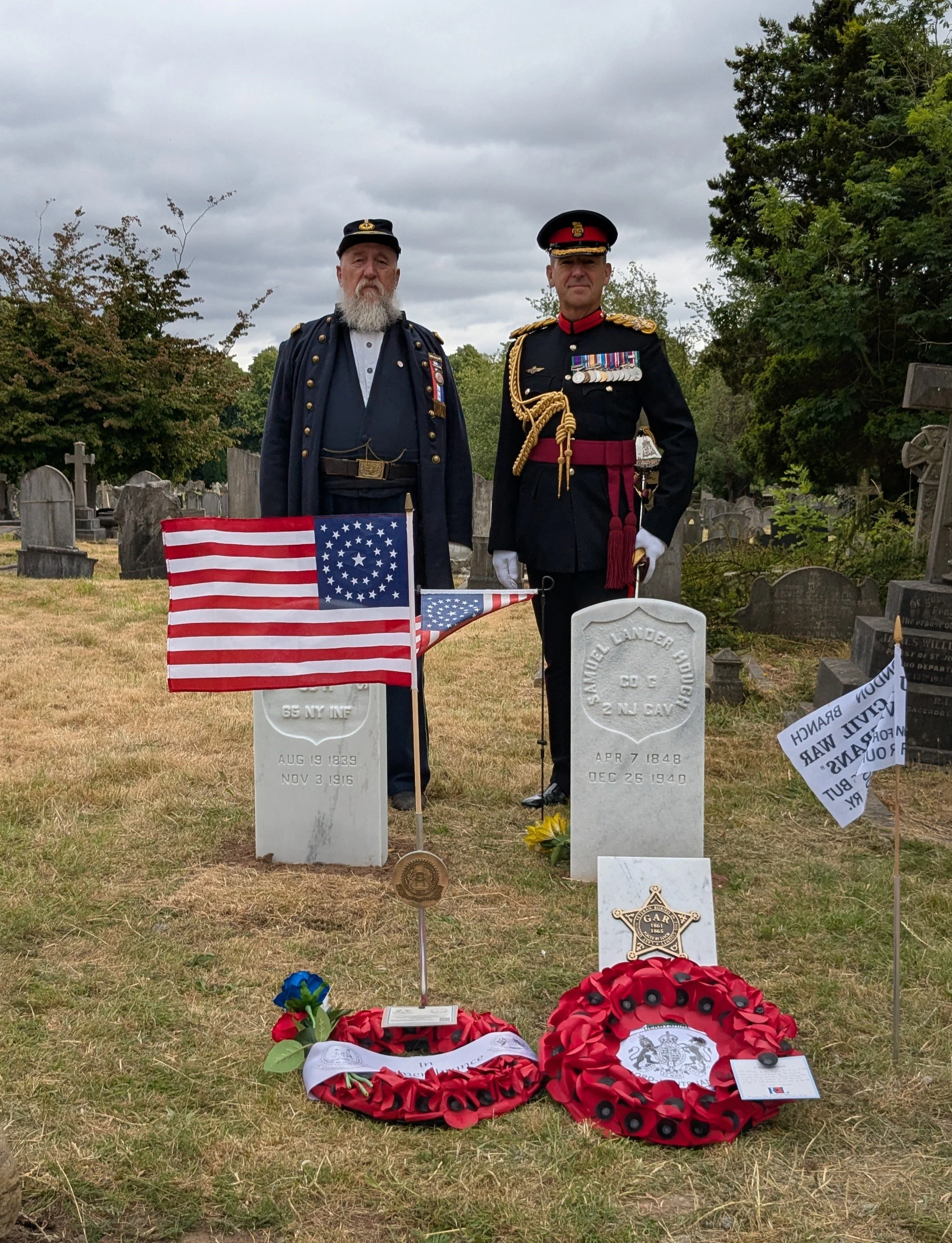
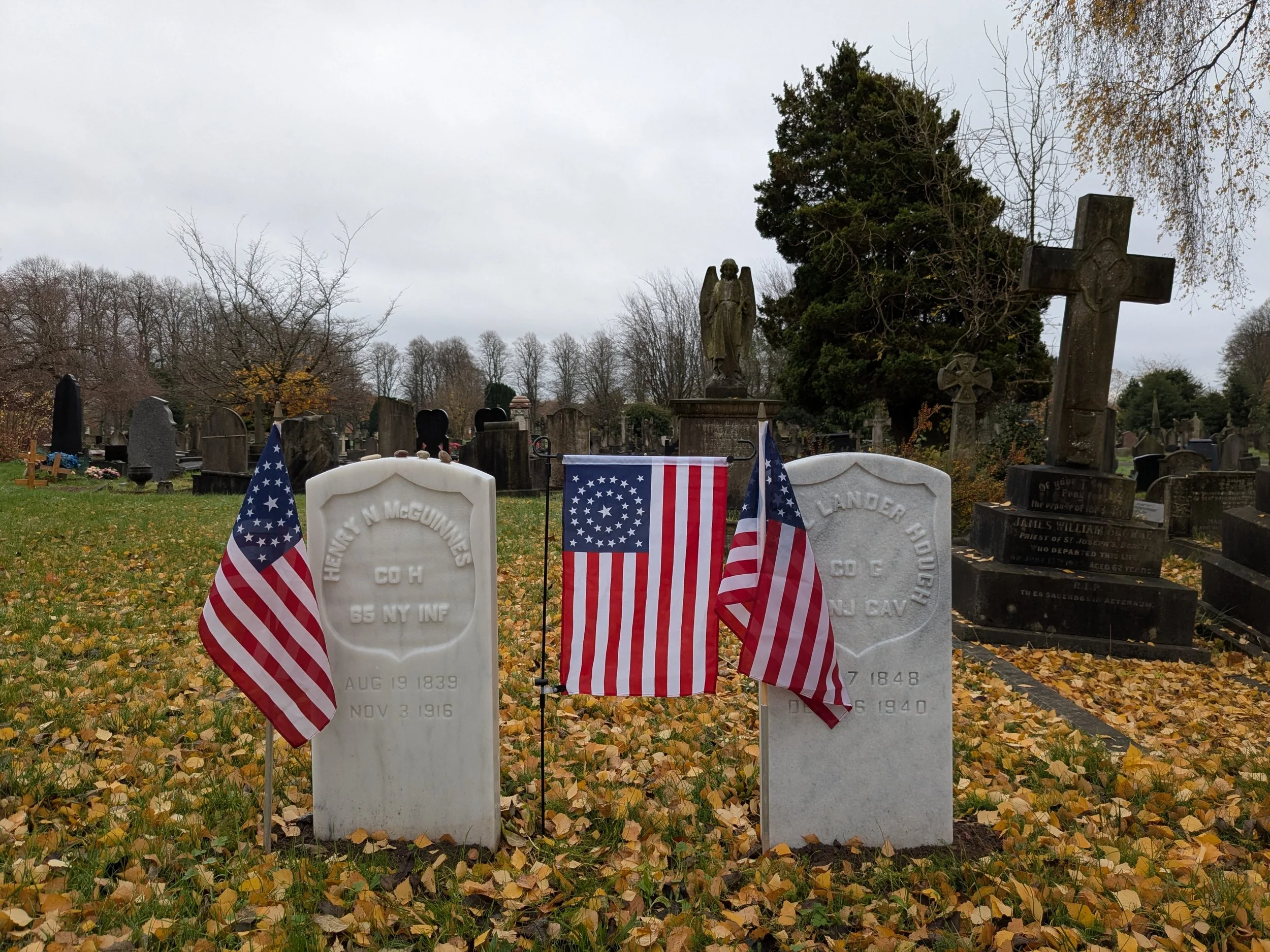
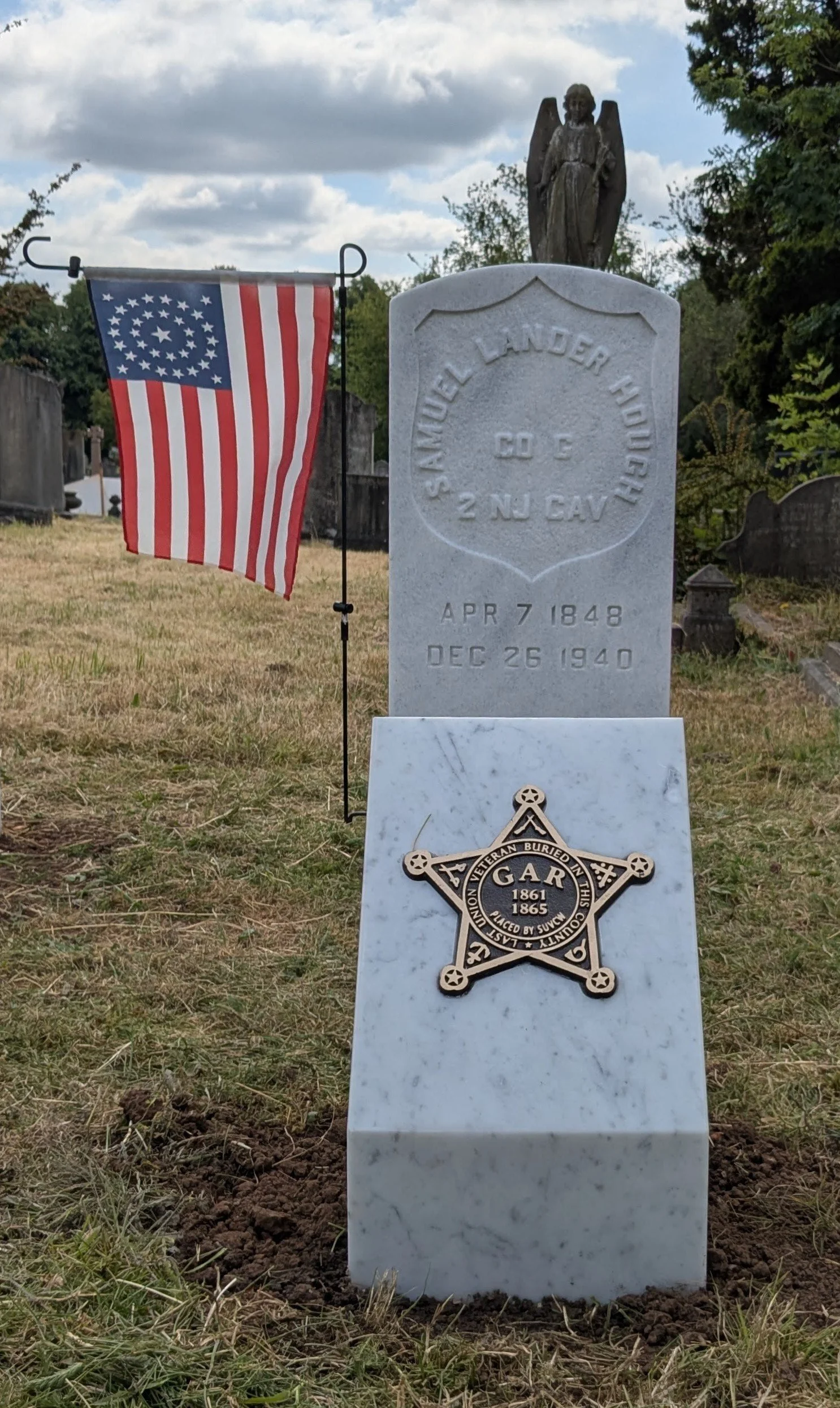
On October 4th 2025, a military headstone was at last provided for Samuel. This was placed not on the grave, but close by, next to a headstone to his friend Henry McGuinness.
Extract from Derby Daily Telegraph 28 December 1940
:------
Death Of Mr S L HOUGH
The funeral will take place on Monday following a service at St Barnabas Church Derby of Mr S L Hough, of Hayworth Street Derby, a veteran of the American Civil War, who died Boxing Day, aged 92.
Mr Hough was the son of a wheelwright in business in Ford Street, Derby and was taken to America by his parents in 1850. He was still a boy when the Civil War broke out, but he gave his age as 18 and joined the 2nd New Jersey Cavalry. He was wounded in the right leg at the Battle of Gettysburg.
On his return to Derby, Mr Hough set up a business as a cooper in Ford Street, in the very house he was born. He retired some years ago.
Mrs Hough and three sons are bereaved.
:------

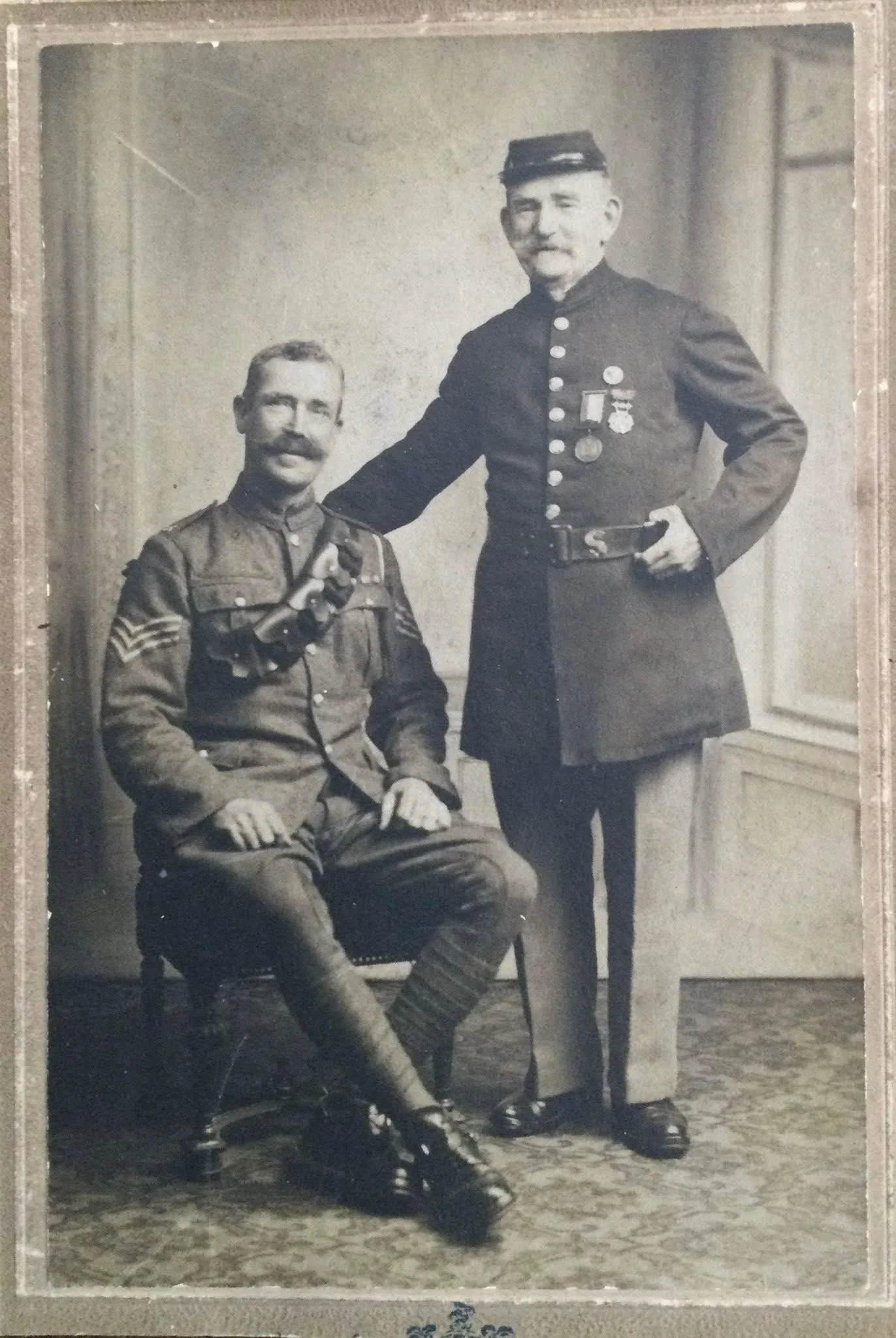
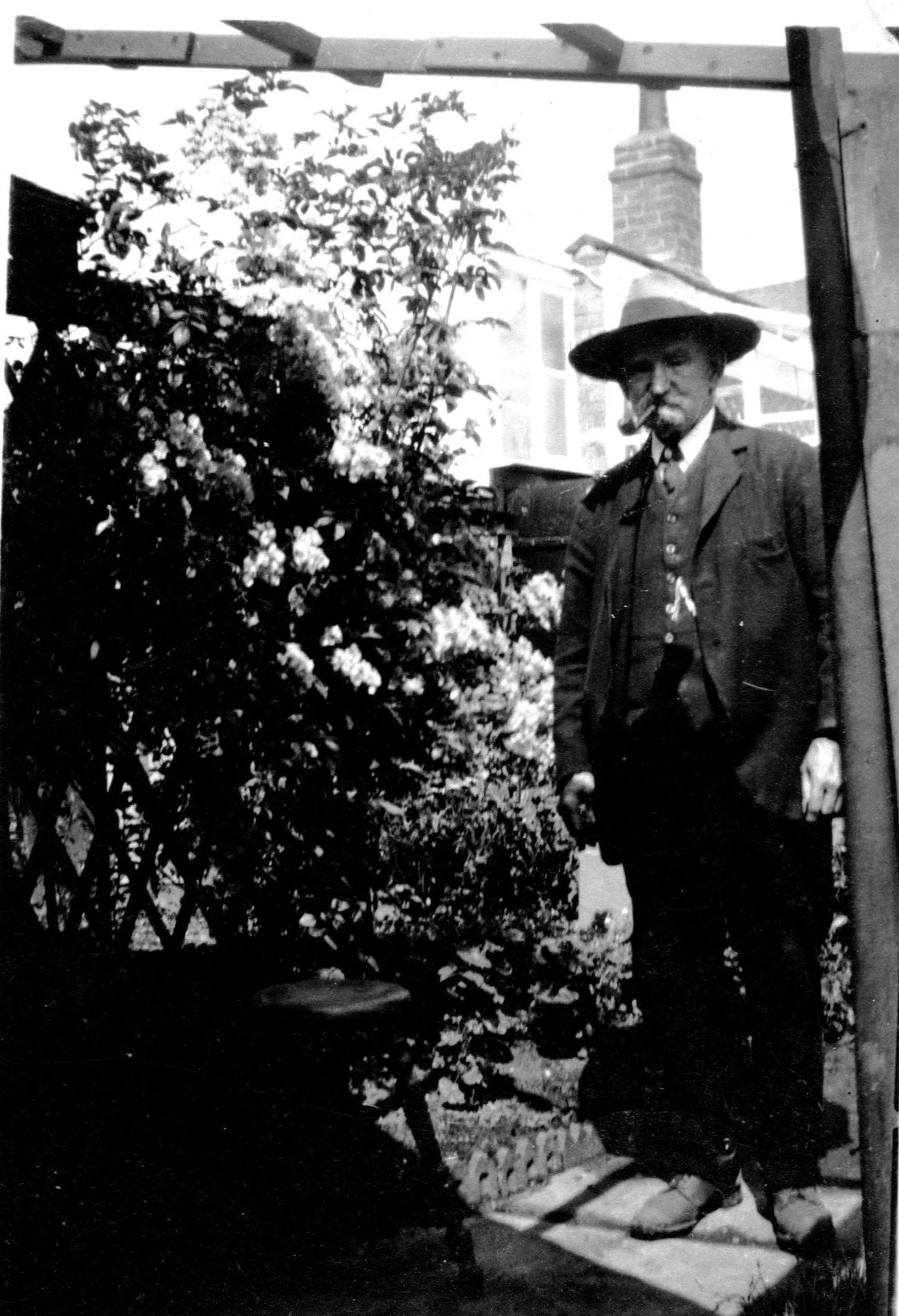
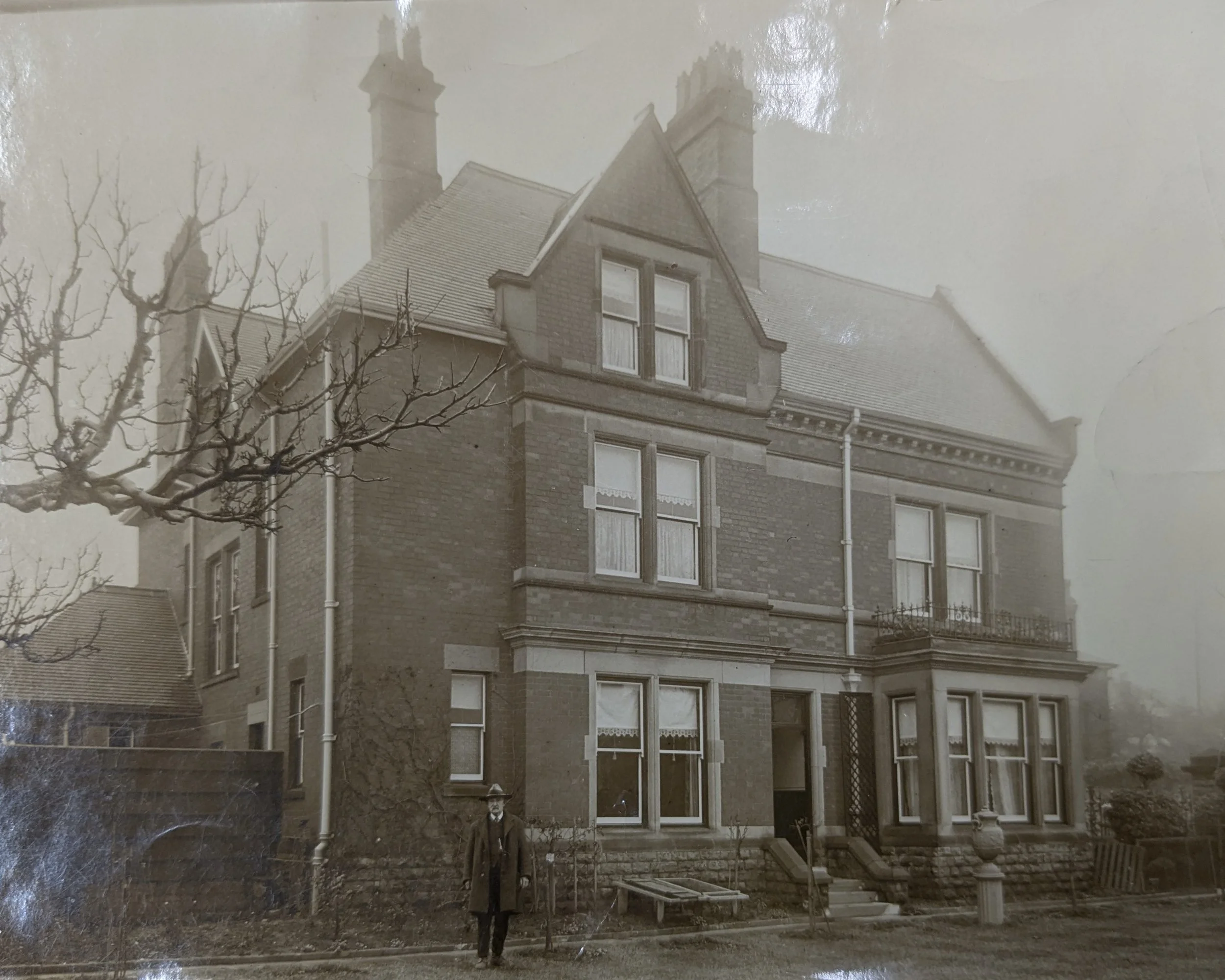
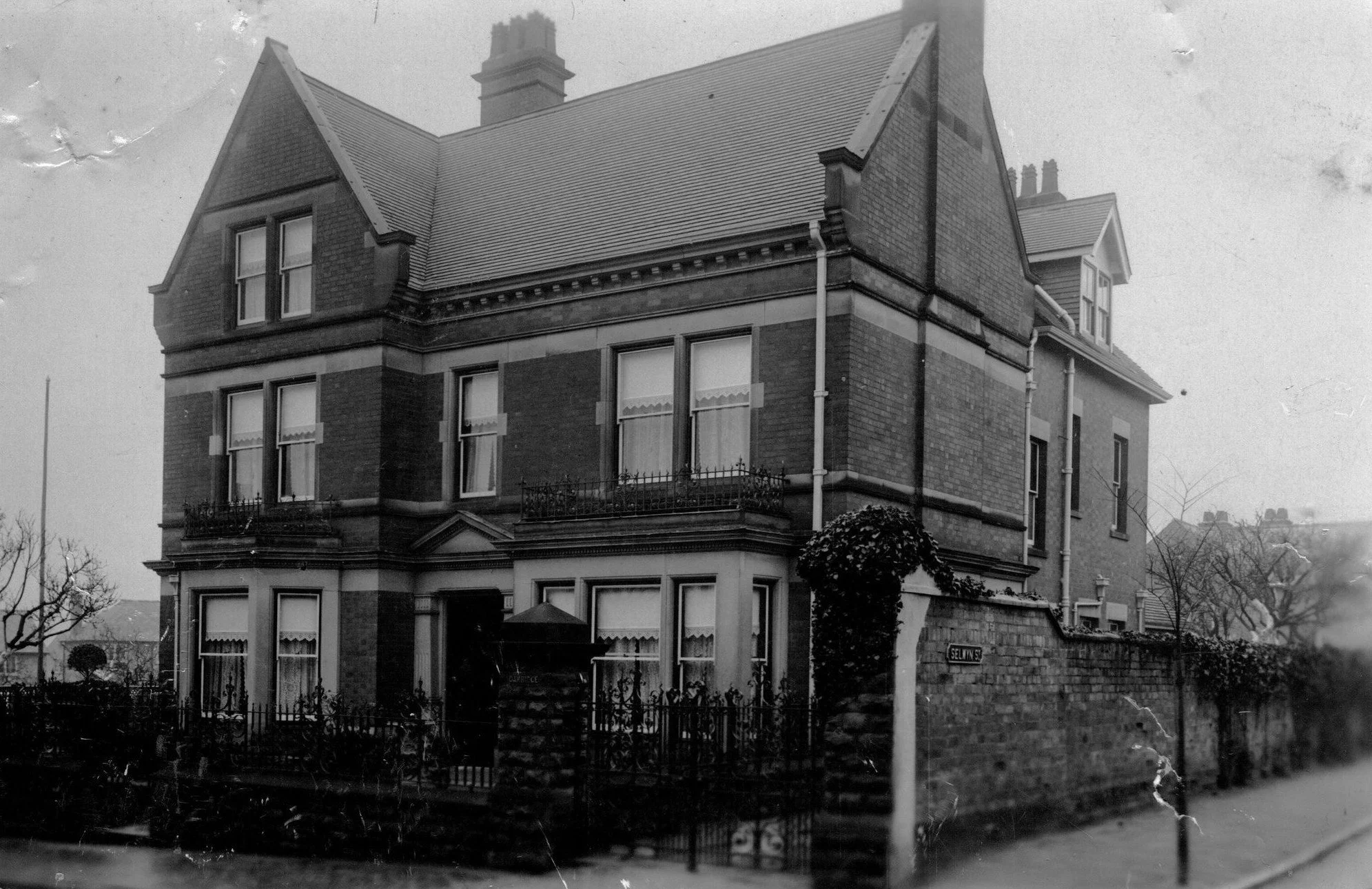
On 4th July 2026, a plaque was unveiled in honour of Samuel Lander Hough being the Last Veteran of the US Civil War to die in the U.K.
The full story and more pictures can be found in our News section here: The Last Veteran.