Unetti Hamer
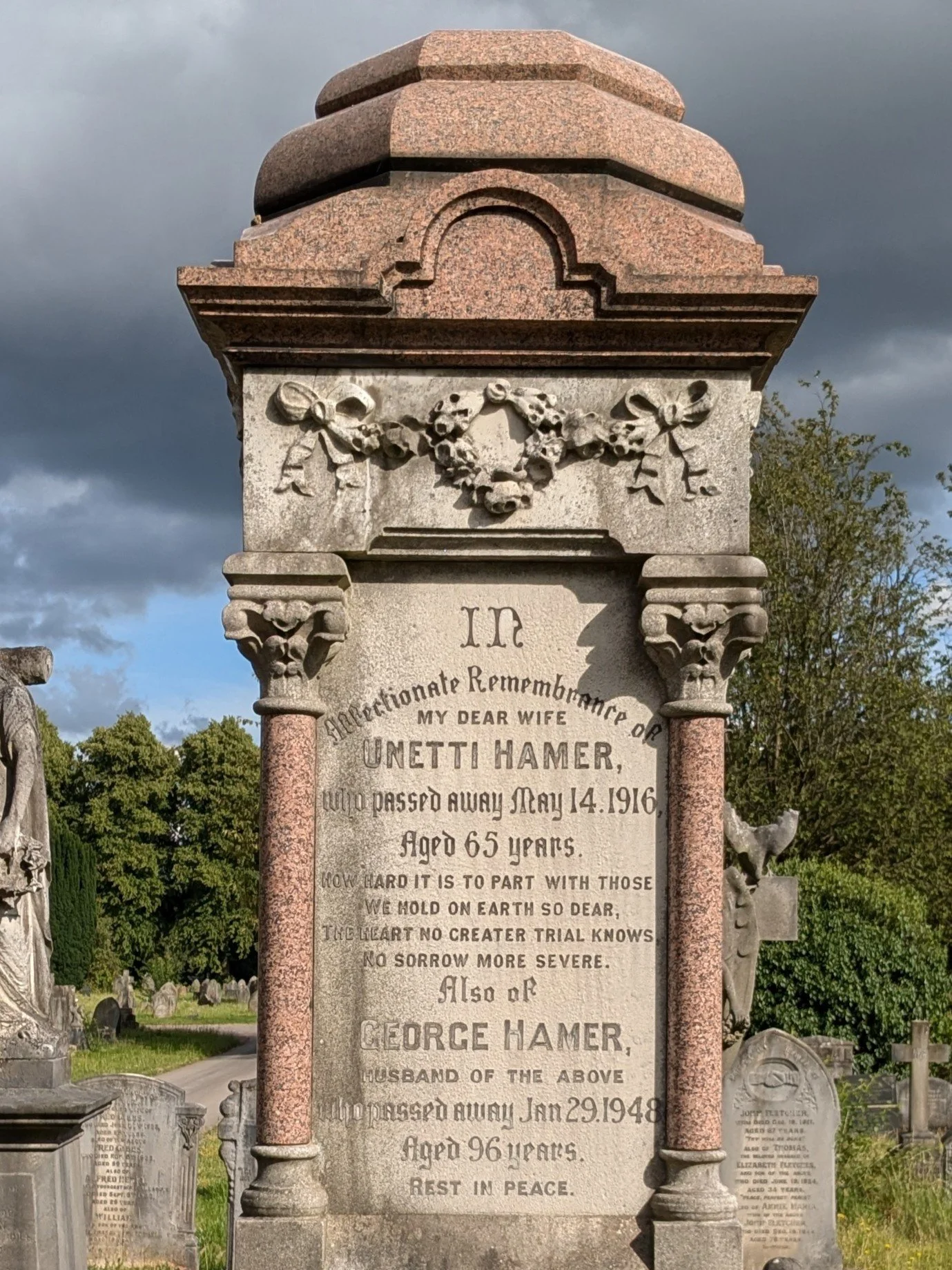
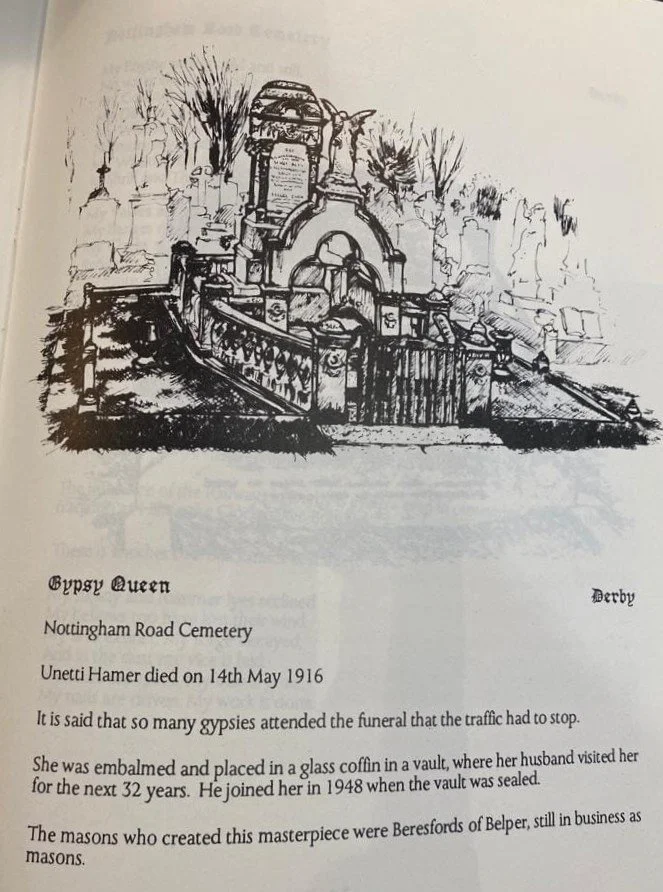
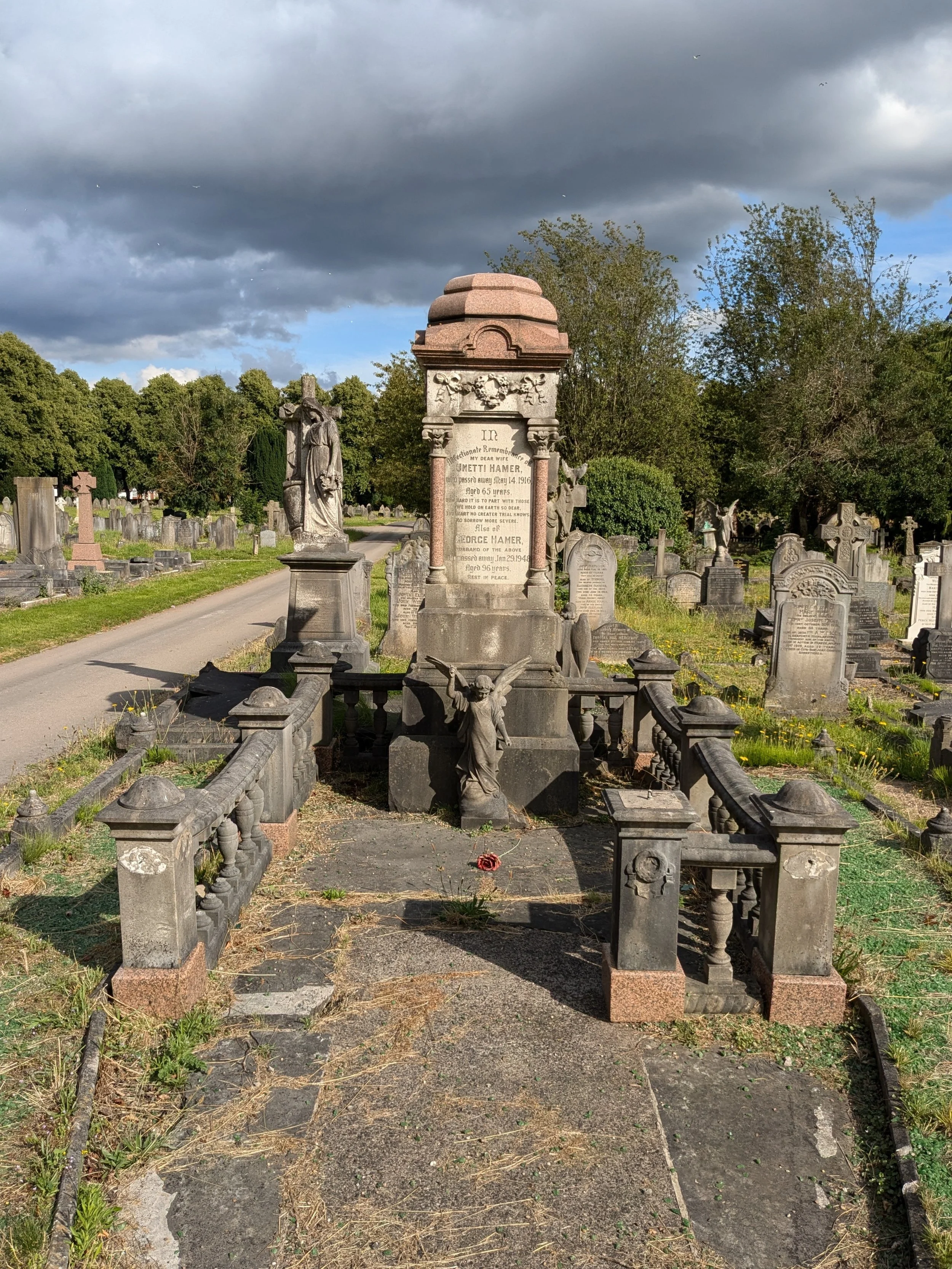
Unetti Hamer died at Colne Market, Lancashire, on 14 May 1916 at the age of 65 and was buried in Nottingham Road Cemetery in one of its most striking and unusual family memorials. Her large monument and sealed vault stand prominently near the entrance to the cemetery and have become one of its best-known landmarks.
Unetti is widely remembered locally as the “Gypsy Queen”, a title that has long been associated with both her and the Hamer family. Over the years many stories have surrounded the grave and vault, helping to make it one of the most talked-about memorials in the cemetery.
A local history publication recorded that so many gypsies attended Unetti Hamer’s funeral that traffic had to be stopped. The same account states that she was embalmed and placed in a glass coffin within the vault beneath the monument. According to the story, her husband George Hamer regularly visited her there for the next thirty-two years until his death on 29 January 1948 aged 96. Their son Leonard Hamer was later buried in the vault after his death on 8 March 1951 aged 70.
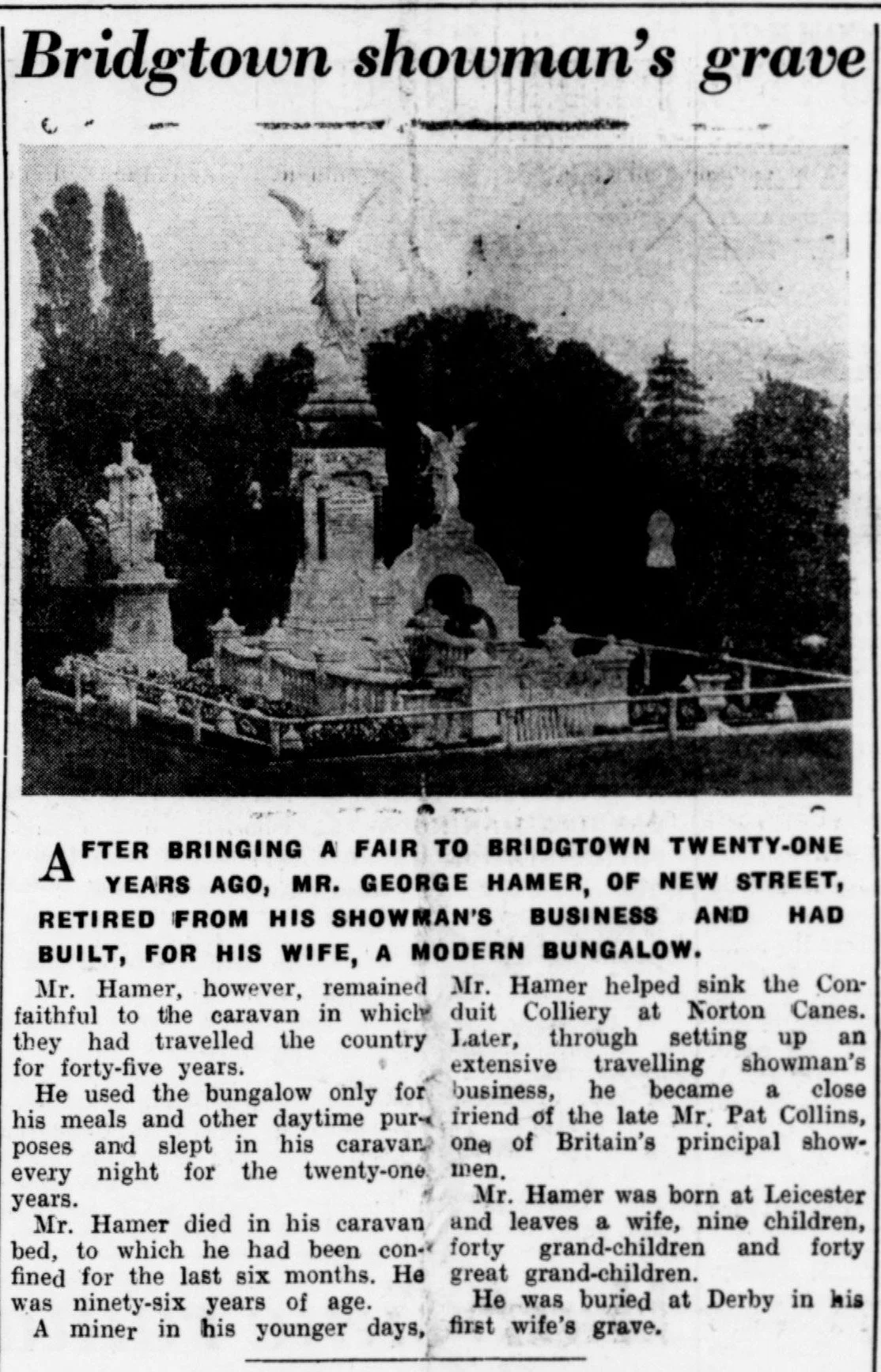
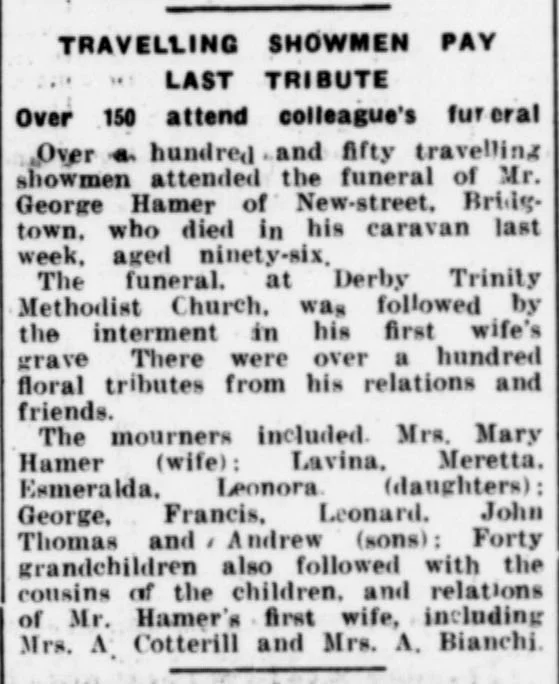
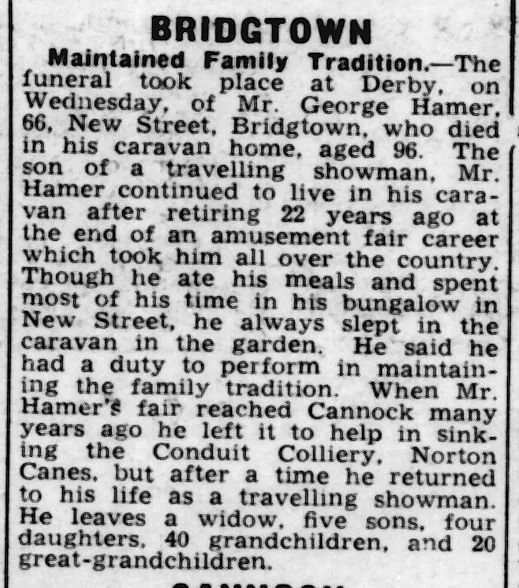
George Hamer himself became well known in travelling showmen’s circles. Newspaper reports of his funeral in 1948 described more than 150 travelling showmen attending the service before he was interred in the family vault. The reports described him as maintaining traditional showmen’s ways even after retirement, continuing to sleep in his caravan beside the bungalow he had built in Bridgtown, Cannock, Staffordshire, after many years travelling fairs around the country.
The memorial itself is highly distinctive, with stone balustrades, decorative columns, angels and a large central monument. The craftsmanship has long attracted attention.
The vault remained part of local memory for many years. During research into the history of the grave, the Friends group spoke with a Derby resident, now in his seventies, who recalled visiting the crypt as a child during the 1950s. He described descending steps beneath the monument and seeing a glass coffin inside. He remembered iron gates at the entrance and recalled being told that Unetti’s body had been preserved. While some details cannot now be independently verified, his recollection provides a remarkable surviving memory of a part of the cemetery that has long since been sealed.
The Friends group also spoke with a former grave digger who worked at the cemetery from 1972 onwards. He recalled that the vault continued to be visited by members of the Hamer family every six months, accompanied by a local stonemason who carried out any maintenance work required. He described descending steps leading to a locked iron door. Inside were wooden coffins with crystal strips inset into the sides and crystal lids, resting on Italian marble plinths. He also recalled cupboards containing urns and equipment used to keep the vault and surroundings in good condition. He believed that the entrance steps were finally sealed around 1977.
Today the Hamer memorial remains one of the most recognisable sites within Nottingham Road Cemetery. Combining local legend, traveller history and living memory, it continues to attract interest more than a century after Unetti Hamer’s death.
Plot: A18/*/4320