George Offiler
Raising a Glass to Offilers Ales.
(This piece, written by Peter Seddon, was first published in Derbyshire Life in 2007. Authors permission to reproduce here).
The last pint of Offilers’ Ales was brewed in Derby on 30 September 1966, when the last large independent brewer in Derbyshire ceased production.
While the name Offilers’ no longer rings with the clarity it once did, it remains familiar to beer enthusiasts, even those who may never have sampled the Offilers’ range itself.
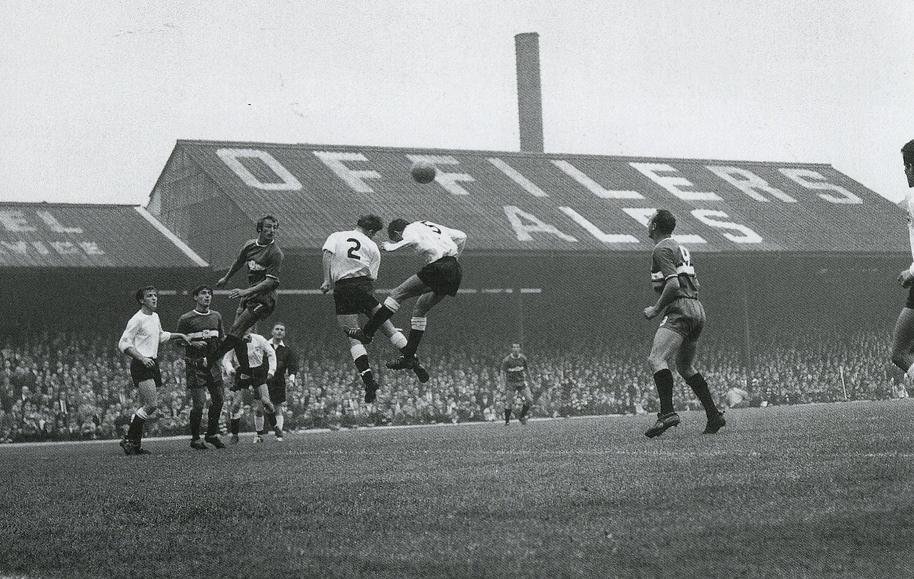
The iconic ‘OFFILERS’ ALES’ advertisement on the Popular Side roof at Derby County’s now defunct Baseball Ground helped keep the name alive, but so too did oral heritage, for beer enthusiasts of a certain age still swear by a ‘pint of Offies’.
The brewery’s founder was George Offiler, born in 1837 in Old Basford, near Nottingham, to Samuel and Newton Offiler (nee Morley). At age 14, George was ‘higgling coal’ (selling it) from a horse and cart, but his uncle George Marshall, a Nottingham brewer, encouraged him to consider the beer trade.
When he was 21 George started brewing at William Street in Basford, and by 1871, then aged 34, he was landlord of the Shoulder of Mutton on Radford Road, Nottingham. There was Derbyshire blood in the family (his grandmother Mary Offiler (nee Campion) was from Trusley), and in 1876 George renewed the link by moving to Derby, where he ran the Vine Inn at 37-38 Whitaker Street, in the thriving Rose Hill area of Litchurch.
In a locality heaving with thirsty workers, it was a perfect time to start brewing. In 1877 George began selling The Vine’s surplus beer to other outlets, and that date is generally taken as the founding date for Offilers’ Brewery.
The brewery flourished further under Henry, becoming a large employer and part of Derby’s daily routine and social landscape. Offilers’ men started work at 6 a.m. with a pint of beer, and were allowed four more during the working day. The company’s own horses, which were stabled and grazed on the site of what in 1909 became Normanton Park (some of the Victorian buildings still survive), pulled the delivery drays, while Offilers’ sales representatives toured the area in horse-drawn gigs.
In 1914 the first steam-powered Offilers’ wagon came into service, and petrol-driven lorries soon followed. The fleet’s proudest moment came on Tuesday 30 April 1946 when a gaily festooned eight-ton Offilers’ dray conveyed Derby County’s triumphant FA Cup winning team from the Blue Peter at Alvaston to a civic reception at the Police Buildings in Full Street.
The Blue Peter was an apt starting point, for it was one of three flagship public houses built by Offilers in the modernist ‘Ocean Liner’ style in the mid-1930s. The others were the Blue Boy in Chaddesden and the Blue Pool in Sunnyhill, each designed by George Morley Eaton and, while much altered, all are still standing.
Although the taste of countless draught pints and bottled beers produced by Offilers’ lingered on the lips of its devotees, the brewery’s heyday and very name itself was destined for oblivion as Offilers’ became a victim of its own success. Expansion had involved them in takeovers – Hill’s of Cromford had been acquired in 1914, followed by the Cavendish Bridge brewery near Shardlow in the 1920s, and John Hair and Son of Melbourne in 1954 - so it was ironic that Offilers’ themselves later became a target.
Henry Offiler’s eldest son - Harry Cecil Offiler (1896-1971) - had inherited the business by the time the London-based Charrington United Breweries executed a takeover in 1965. They acquired the Ambrose Street plant, 238 public houses, a long tradition and a fine name. But although Charrington’s urged all Offilers’ workers to ‘regard this as a merger’, they had announced within a year that ‘economical modernisation of the Derby plant is simply not viable.’
Charrington’s were in turn ‘absorbed’ by Bass, and the last pint of Offilers’ Ales was brewed in Derby on 30 September 1966. Many of the workers were genuinely saddened by the brewery’s passing, especially when the premises were demolished too. The Ambrose Street buildings fell on 6 March 1970 to make way for a supermarket.
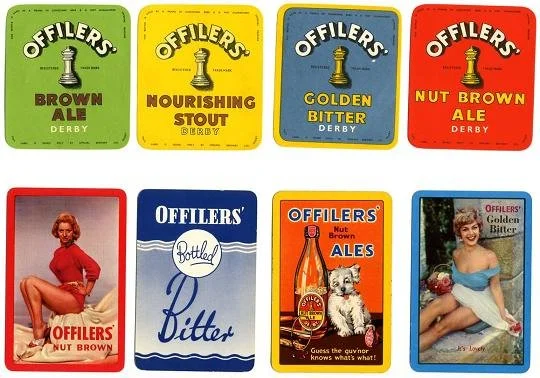
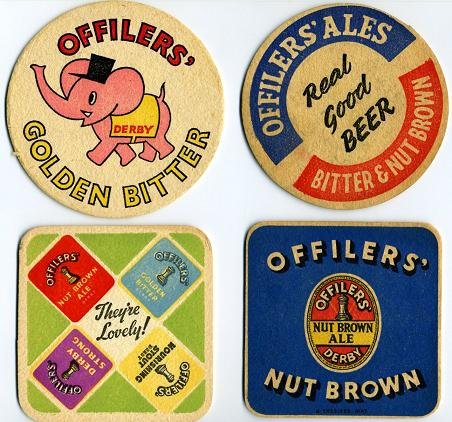
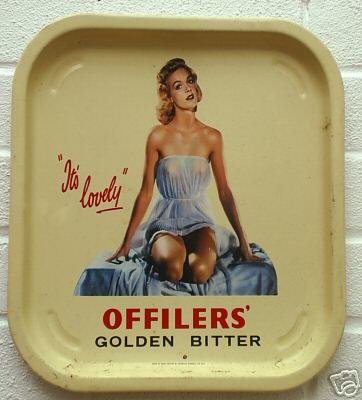
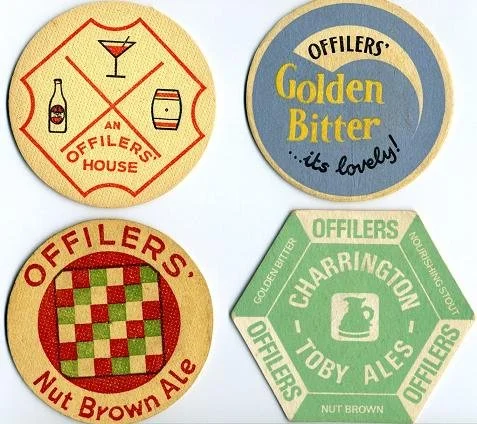
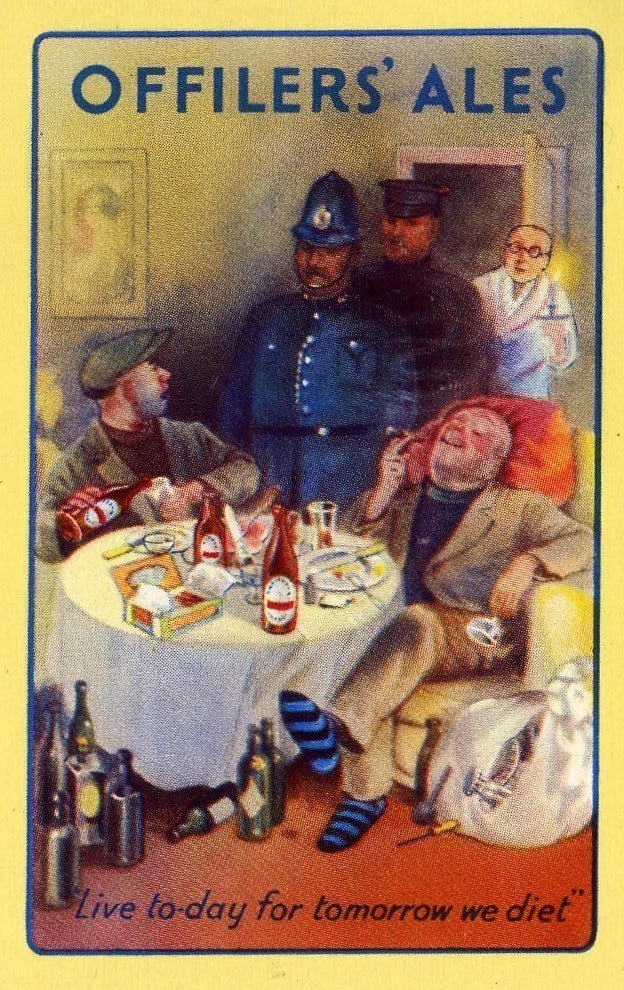
A brief nostalgic revival occurred in May 1996 when the Bass Museum brewed a tribute ‘Offilers’ Golden Bitter’, but enthusiasts for the original Offilers’ must now be content with mere memories. The Falstaff in the Normanton area of Derby, close to the original brewery, displays an evocative collection of ephemera, and the Royal Oak at Ockbrook, a former Offilers’ house, has some nostalgic bygone advertisements on its walls.
In 1884, as sales grew, George expanded what was still known as the ‘Vine Brewery’ by buying the premises of The Star Tea Company on Ambrose Street, off Normanton Road. The building had begun life as an Ordnance Depot in 1806, and in the 1820s housed a silk-throwing business. George Offiler had settled upon the perfect product. Beer was less explosive than weaponry, as smooth as any fine silk, and considered by many far more efficacious than the humble ‘cuppa’. The plant was extended to the other side of Ambrose Street as the business boomed, and in 1890 it went public with capital of £50,000 and became known as the Offilers’ Brewing Company Limited.
In that year they produced 509,000 gallons of ale, owned 14 Derby pubs, and 26 others scattered around South Derbyshire, Leicestershire and the Belper area. Many of them still stand, the foremost historically being the Victoria on Cowley Street, in Derby’s old West End, which in 1895 earned the lasting distinction of being the first purpose-built pub erected by Offilers’.
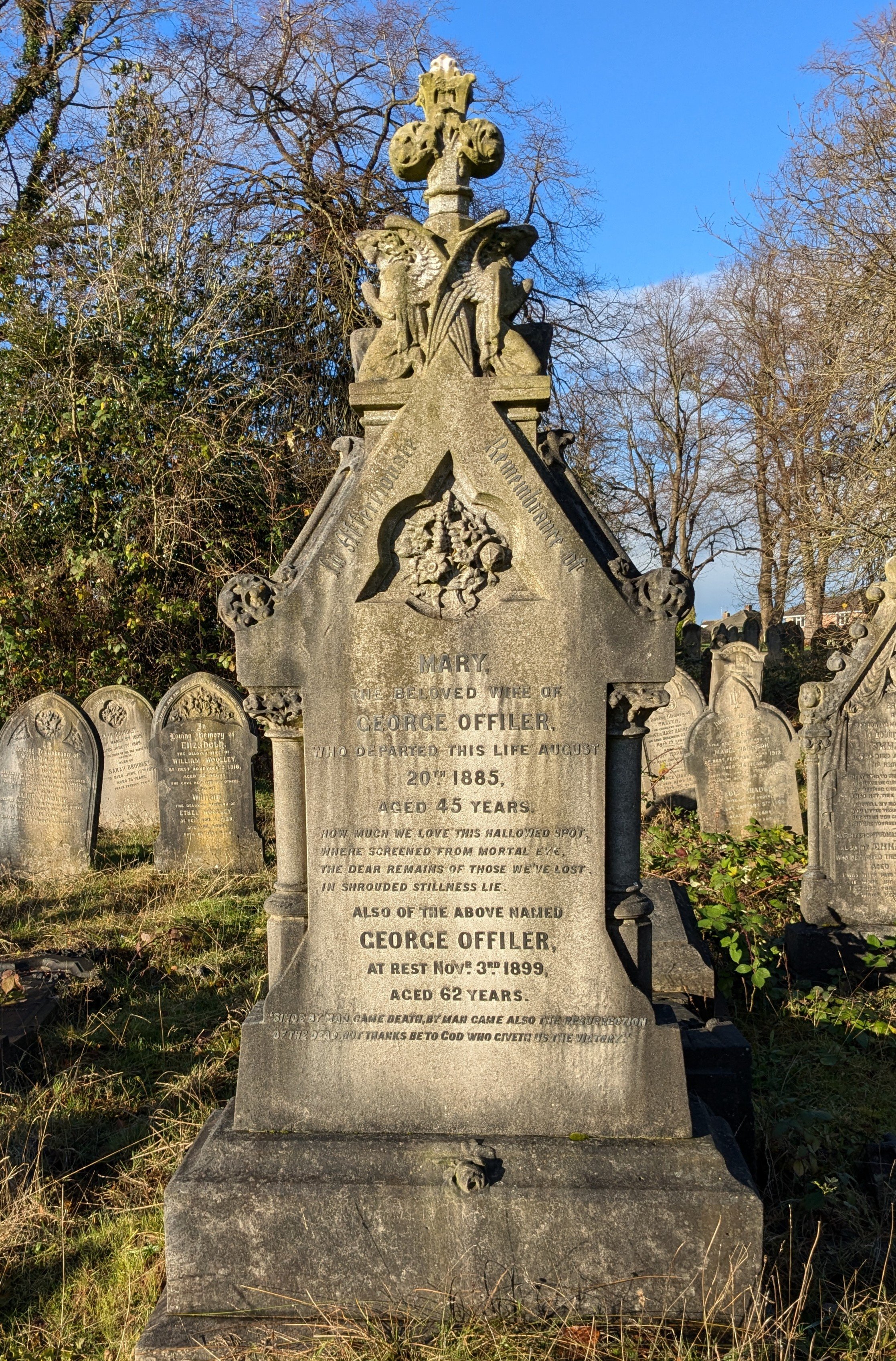
Living at ‘Brooklyn House’, Charnwood Street, Derby, George was ever on hand to oversee his thriving operation, and by the time he died on 3 November 1899, aged only 62, he had laid the foundation for a brewing empire of both local and national renown. Derbyshire’s most celebrated brewer is buried in Nottingham Road Cemetery.
George’s son Henry Offiler - who lived at ‘Salisbury House’, 23 Salisbury Street, just yards from the ‘Old Depot’ brewery - continued the business. Strictly speaking he wasn’t a fully blown Offiler, for he was born John Henry Mark Scott in 1861, the son of Mary Scott, with whom George had a liaison while still married to his first wife Eliza (nee Smart). John Scott took the name Henry Offiler only when George married Mary in 1872. It has to be said that the Offiler family are rather a nightmare to genealogists, since when Mary died in 1885 George married a third time, this time to Mary Ellen Slater.
The Popular Side roof at the Baseball Ground, which had carried the brewery’s advertisements ever since the 1930s, made way for the brand-new Ley Stand in 1969, but isolated vestiges of Offilers’ livery still survive in a number of public houses, etched on window glass or painted on flaking brickwork. They too will disappear in time.
Offilers’ demise was a debatable sign of ‘progress’ in a changing age. Yet sixty years on the thirst for good beer is again being satisfied locally, for Derbyshire is now home to a burgeoning number of micro-breweries, and the county has become a favourite haven for real ale enthusiasts from around the country. So once more may glasses be liberally charged with Derbyshire ale. Cheers!