
John William “Jack” Robinson (1870–1931)
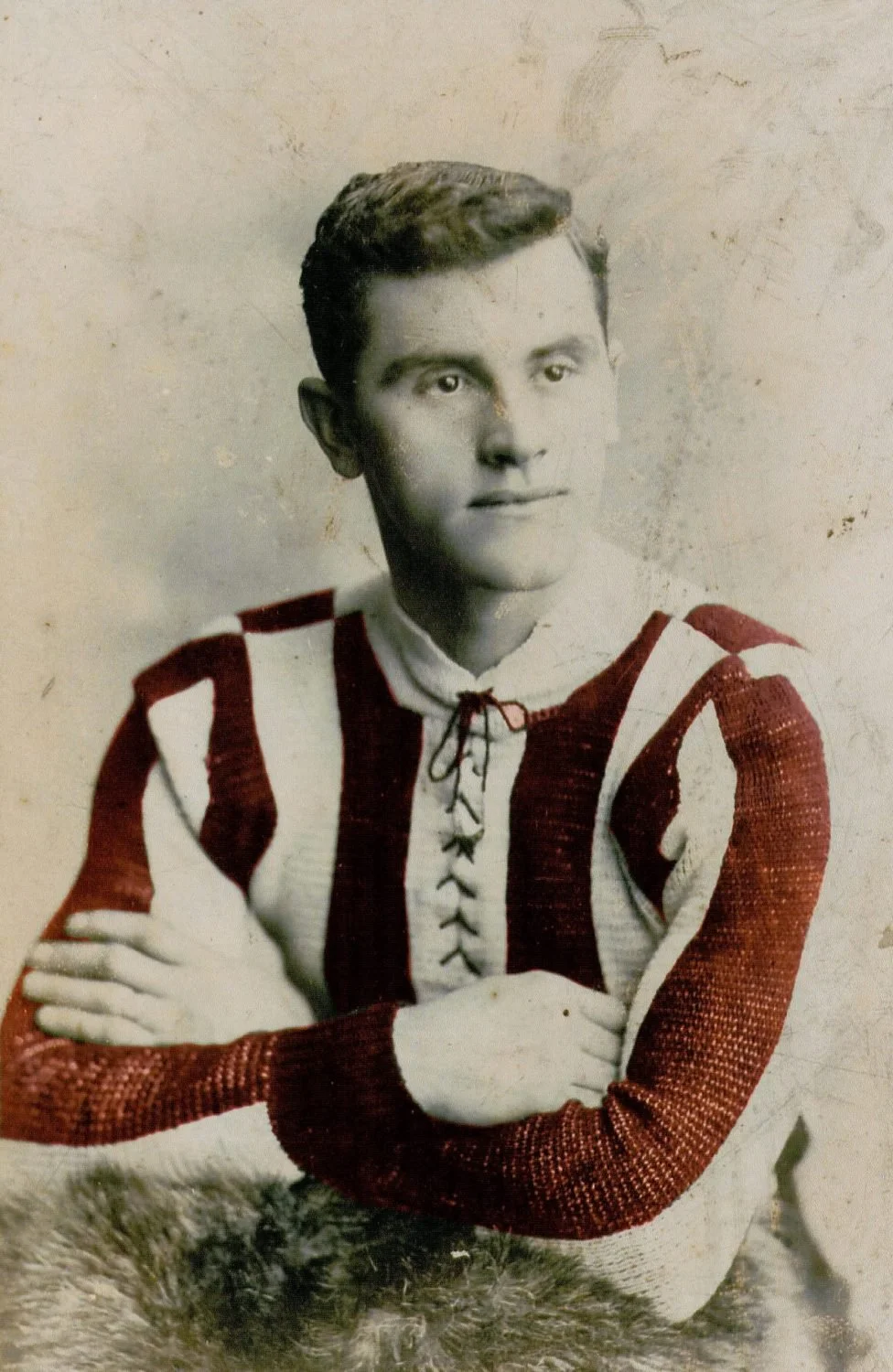
The “Prince of Goalkeepers”
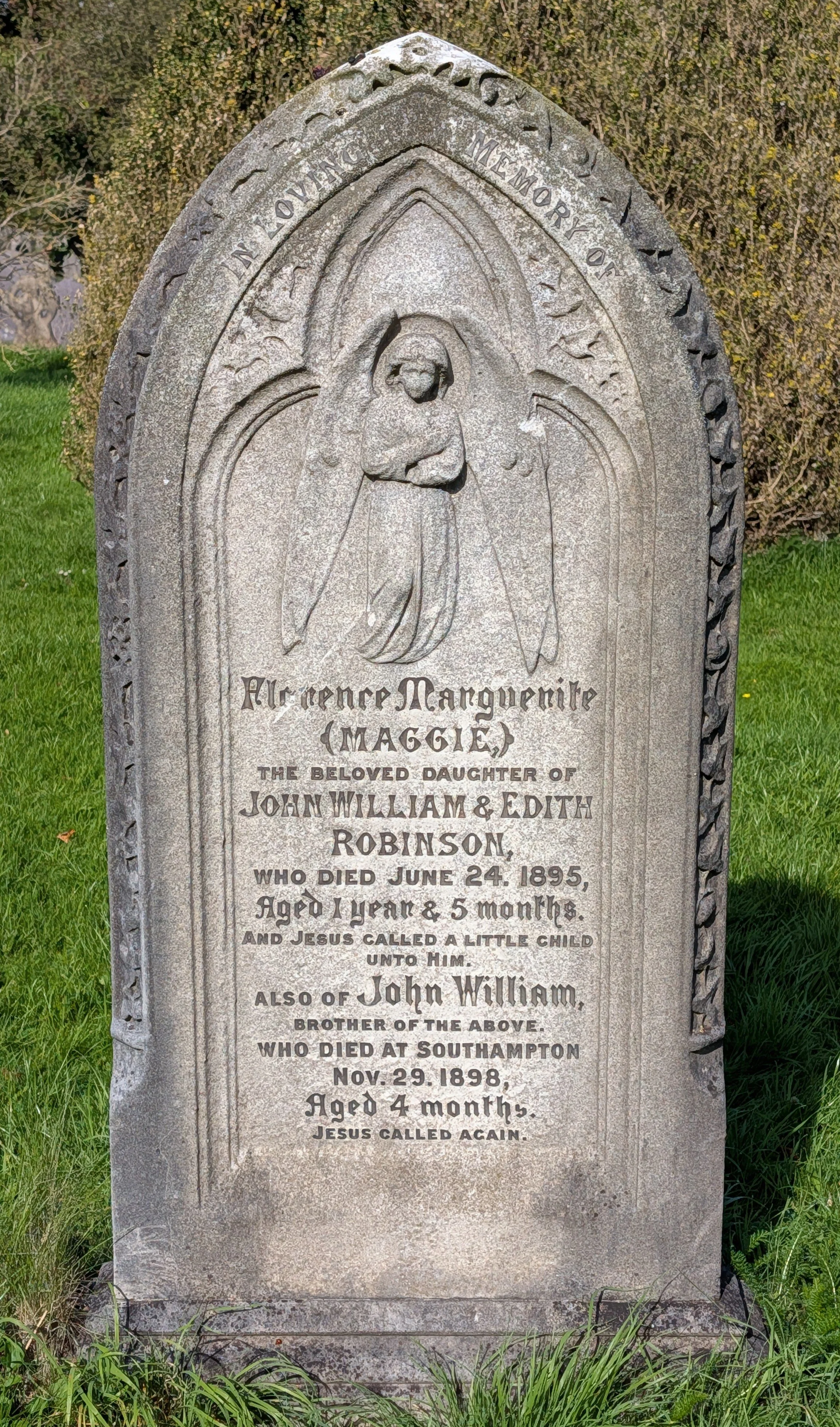
The headstone on grave 10257 at Nottingham Road Cemetery remembers two young children: Florence Marguerite Robinson, known as Maggie, and her little brother John William. It names their parents, John William and Edith Robinson, but carries no separate inscription recording their father’s death.
The cemetery registers complete the story. Buried with the children is John William “Jack” Robinson, the Derby-born footballer who represented England eleven times and became known as the “Prince of Goalkeepers”.
Jack was born in Derby on 22 April 1870, the son of a publican. Before football became his full-time occupation, he worked as a joiner. His early playing career included Derby St Neots and Derby Midland, followed by Lincoln City, where he helped the club win the Midland League championship in 1890. He returned to his home town to join Derby County in 1891.
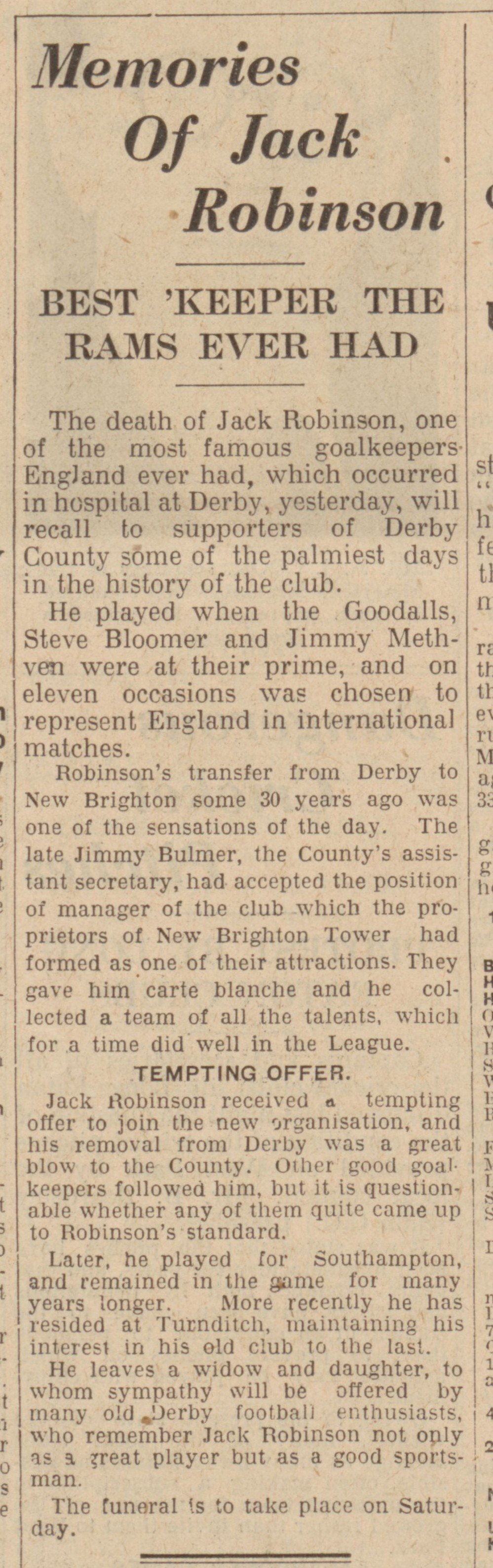
Over six seasons, Jack made 163 league appearances for the Rams. He played in a side whose familiar names included John and Archie Goodall, Jimmy Methven and Steve Bloomer. In 1895–96, Derby finished runners-up to Aston Villa in the First Division, the club’s highest league placing up to that time.
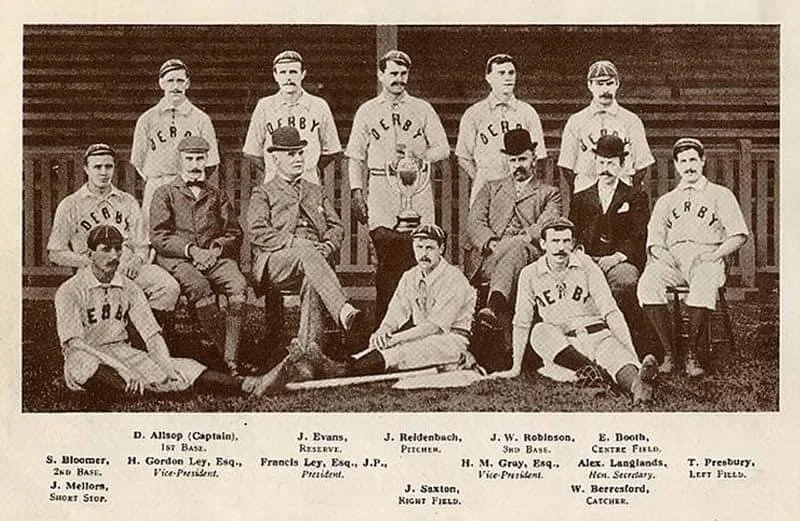
His sporting ability also found an outlet in baseball. Francis Ley’s encouragement of the game in Derby brought footballers and other local sportsmen into a second summer sport. Jack played third base for Derby Baseball Club, alongside Bloomer at second base, helping the club become British champions in 1895 and 1897. Their baseball careers provide another connection with the ground that became Derby County’s permanent home in 1895.
Recognition at international level followed. On 20 February 1897, Jack made his England debut against Ireland at Trent Bridge, Nottingham, keeping a clean sheet in a 6–0 victory. He played against Scotland that April and continued to receive international honours after leaving Derby.
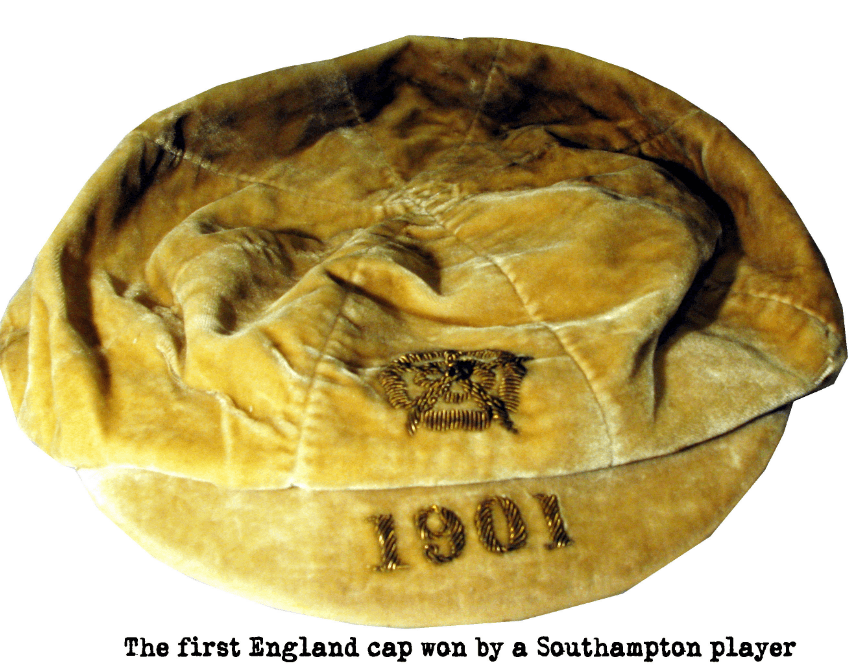
His eleven England appearances were spread across three clubs: two with Derby County, three with New Brighton Tower and six with Southampton. His final international was another victory over Ireland, 3–0 at The Dell on 9 March 1901.
Jack’s departure from Derby in 1897 was remembered locally as a considerable loss. New Brighton Tower was an ambitious club assembled under former Derby assistant secretary Jimmy Bulmer, and Robinson was among its notable recruits. Looking back after his death, the Derby Daily Telegraph described the move as one of the football sensations of its day.
After one season at New Brighton, Jack joined Southampton in 1898. A contemporary report in the Hampshire Advertiser of 25 May discussed the £400 transfer fee demanded by Derby’s directors, explaining that it had deterred other interested clubs. His reputation was already established, but some of his most successful seasons still lay ahead.
During five years with Southampton, he helped the club win the Southern League championship in 1898–99, 1900–01 and 1902–03. He also played in the FA Cup finals of 1900 and 1902. Southampton lost to Bury in the first and to Sheffield United, after a replay, in the second. Those five seasons brought Jack three championship medals and two FA Cup runners-up medals.
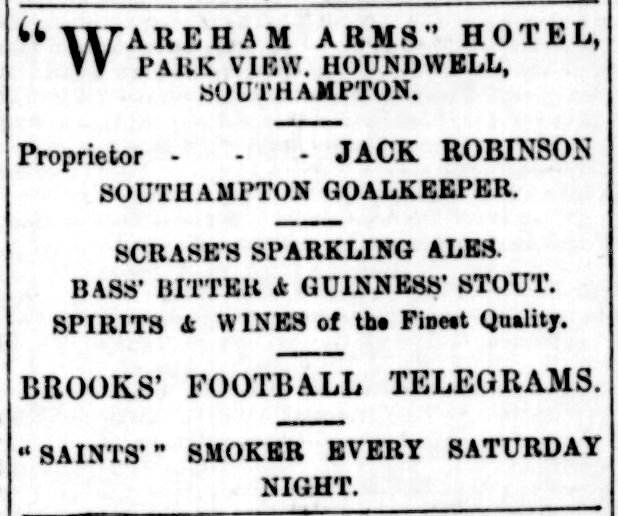
Southampton’s historians recall his determination during a crucial match at Bristol City in 1899. Despite a painful hand injury, he returned to goal as Southampton recovered from 2–0 down to win 4–3 and secure the championship. Alongside football, he ran the Wareham Arms in Southampton. An advertisement dated 1 October 1898 proudly named its proprietor as “Jack Robinson, Southampton Goalkeeper”.
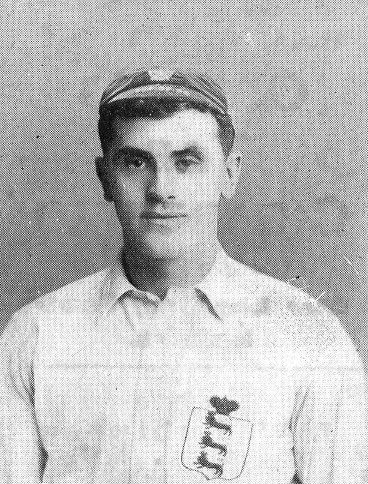
One of his most lasting contributions came during Southampton’s European tour in 1901. His willingness to dive and stretch for low shots impressed spectators who were unfamiliar with such athletic goalkeeping.
Slavia Prague’s own history records Southampton’s 3–0 victory there on 24 April 1901 and an exhibition in which Robinson demonstrated his skill against a succession of shots. It associates his name with “robinsonáda”, a term used for a goalkeeper’s spectacular diving save. His reputation therefore survives in football language as well as in the record books.
In an interview published in the Athletic News on 4 June 1928, Southampton official Ernest Arnfield recalled the excitement surrounding the visit. Robinson’s fame had preceded him, and spectators wanted to see a demonstration of his goalkeeping. Afterwards, Arnfield remembered, the crowd carried him shoulder-high to the dressing room.
Jack also offered advice to aspiring players. His chapter “How to Keep Goal”, published in Association Football and the Men Who Made It, opened with the observation that “Goal-keepers do not grow on trees”. In October 1907, the Hexham Courant carried an article under his name on becoming a great player, particularly a goalkeeper. He emphasised the value of developing natural ability through good habits and practice.
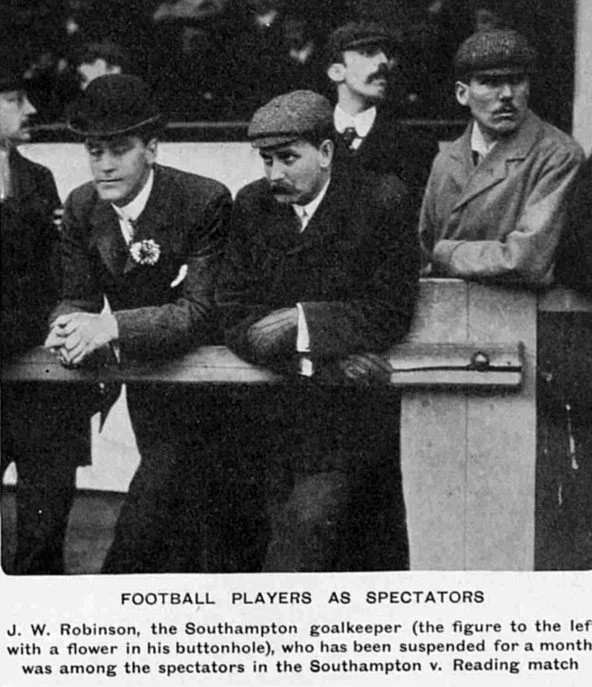
There were less successful moments, too. In 1902, he received a month’s suspension after striking a spectator at New Brompton. A surviving photograph shows him watching Southampton play Reading during that suspension, dressed in a suit with a flower in his buttonhole.
Away from football, Jack and Edith were interested in amateur dramatics. A correspondent recalling him in the Liverpool Echo on 4 November 1931 described him as a capable actor and remembered both husband and wife taking an active interest in the amateur stage.
Their family life had already brought two bereavements. Their daughter Florence Marguerite, affectionately called Maggie, died on 24 June 1895, aged one year and five months. She was buried at Nottingham Road Cemetery on 26 June. The headstone describes her as the beloved daughter of John William and Edith Robinson.
On 29 November 1898, their infant son John William died at Southampton. He was brought to Derby and buried with Maggie on 2 December. The inscriptions remember both children with words recalling Jesus calling a little child to him.
Jack left Southampton in 1903 to become part of Plymouth Argyle’s first professional team. His subsequent career included Millwall, Exeter City, the Plymouth club Green Waves and Stoke. He continued playing beyond his fortieth birthday before taking his football experience to Rochester, New York.
His time in America brought serious ill health. The SaintsPlayers website records that he underwent brain surgery and that his former clubs were approached for assistance when another operation was required in 1914. A contemporary appeal in the Liverpool Echo of 17 January 1914 described his difficult circumstances and efforts by friends in Britain to raise money for him.
After returning to Britain, he worked as an insurance salesman in Derby. In his later years he lived at Turnditch and, according to his Derby obituary, maintained his interest in his old club to the end.
Jack died in hospital in Derby on 28 October 1931, leaving Edith and their daughter May. The following day, the Derby Daily Telegraph published its recollections beneath the heading “Best ’Keeper the Rams Ever Had”. It remembered a great player and a good sportsman.

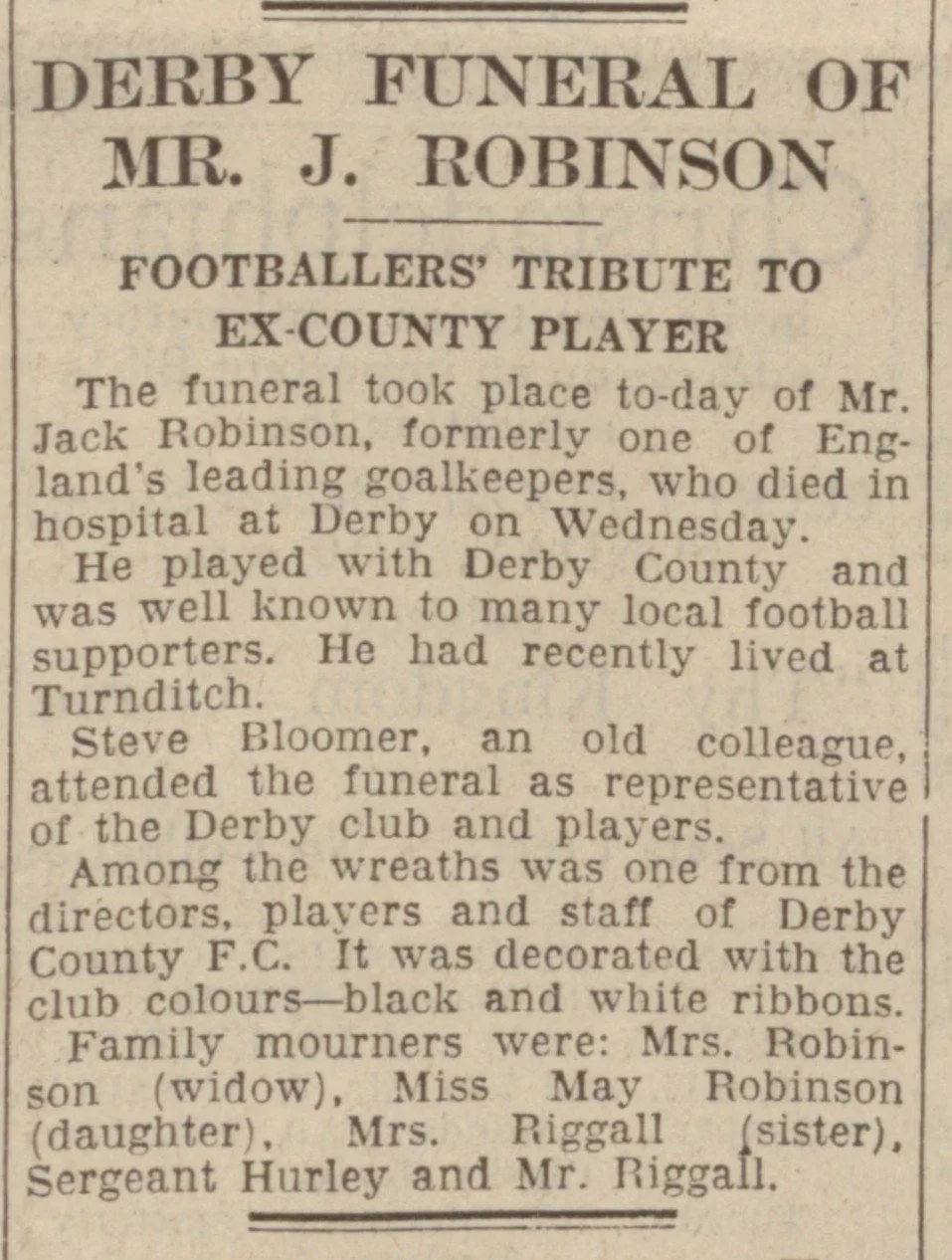
His funeral took place at Nottingham Road Cemetery on Saturday 31 October. Steve Bloomer attended as the representative of Derby County and its players. Among the wreaths was one from the club’s directors, players and staff, decorated with black and white ribbons. Edith and May were among the family mourners.
The Heanor Observer described a small gathering of relatives and friends around the grave, including Bloomer, paying their last respects to the man remembered as the “Prince of Goalkeepers”.
Jack was laid to rest with Maggie and their infant son in grave 10257. The headstone continues to tell the children’s story, while the burial registers preserve the record of their father’s final return to the family grave.
Acknowledgements and sources
With thanks to SaintsPlayers.co.uk for additional information and the historical portraits, postcards, cap photograph, match photographs and other images supplied from its website.
The England portrait is from Wikimedia Commons and is marked as public domain.
This biography draws on Nottingham Road Cemetery’s burial and grave registers, the family memorial, contemporary newspaper reports, England’s international playing records, the Grecian Archive, the Plymouth Argyle Heritage Archive’s Greens on Screen, and Slavia Prague’s historical records.
Principal newspaper sources include the Derby Daily Telegraph, 29 and 31 October 1931; Heanor Observer, 5 November 1931; Liverpool Echo, 4 November 1931; Athletic News, 4 June 1928; Weekly Dispatch, 30 April 1905; and Hexham Courant, 5 October 1907.