Alice Ann Wheeldon (Nee Marshall)
///tape.vital.monday
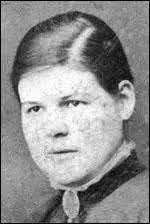
Alice Marshall was born in Derby in 1866, the daughter of William Marshall, a farmer from Tollerton, Nottinghamshire. She left school at the age of twelve. In 1886 she married William Augustus Wheeldon and the couple moved to Bootle, near Liverpool. Their four children were born there: Nellie (1889), Hettie (1891), William Marshall – known as Will – (1892) and Winnie (1893).
The family returned to Derby in 1894. In 1901, following the death of her father, Alice used her inheritance to take over an established business as a wardrobe dealer at 12 Pear Tree Road, Normanton. She bought and sold high-quality second-hand clothing and was the main income earner for the household. Family letters describe the daily routine of mending garments, supplying customers and maintaining the small semi-detached house in which they lived.
Although she had little formal education herself, Alice was determined that her children should have opportunities she had not enjoyed. All four trained as teachers or pursued further study. The family were active in local political and social movements. Alice was known locally as a sympathiser with the suffragists, and the household was involved in socialist and pacifist activity. They supported the No-Conscription Fellowship and opposed the introduction of compulsory military service in 1916.
By the end of 1916 Alice was deeply anxious about her son Will, a conscientious objector who had already been imprisoned and was again facing military proceedings. It was in this tense atmosphere, in the weeks around Christmas 1916, that events unfolded which would lead to her arrest.
On 21 December 1916 an undercover agent using the name “Alex” or “Alec” Gordon was sent to Derby. He first visited the Wheeldon household on 26 December, posing as a conscientious objector seeking assistance. He returned the following day. During conversations over the next few days, Alice spoke of her concern for her son and for other young men facing imprisonment.
“Gordon” told her of a possible emigration route to the United States for conscientious objectors. He also raised what he described as his own problem: friends held in an internment or detention camp guarded by dogs. According to the defence case later presented at trial, Alice agreed to obtain poison for him for use against the guard dogs, believing this to be connected with helping men escape harsh treatment. On 29 December he introduced another man, Herbert Booth, to the household, presenting him as a fellow conscientious objector.
On 1 January 1917 a parcel containing poison, sent from Southampton by Winnie Mason and supplied by her husband Alfred Mason, was intercepted at Derby railway station. This parcel formed the basis of the Crown’s case.
Alice Wheeldon, her daughters Harriet (Hettie) Wheeldon and Winnie Mason, and her son-in-law Alfred Mason were arrested on 30 January 1917. On 3 February they were charged with conspiring to murder, and with soliciting and proposing the murder of, Prime Minister David Lloyd George and Labour leader Arthur Henderson.
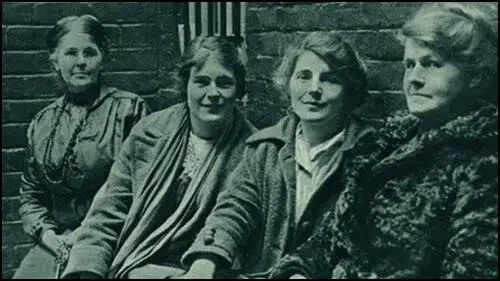
(Alice Wheeldon, right, with her daughters and a warden whilst in custody at Derby Police Court)
The trial began at the Central Criminal Court, the Old Bailey, on 6 March 1917 before Mr Justice Low. The prosecution was led by the Attorney-General, F. E. Smith KC MP. Herbert Booth gave evidence, but “Gordon” was not called and no explanation was provided beyond that there were reasons which the Attorney-General considered good.
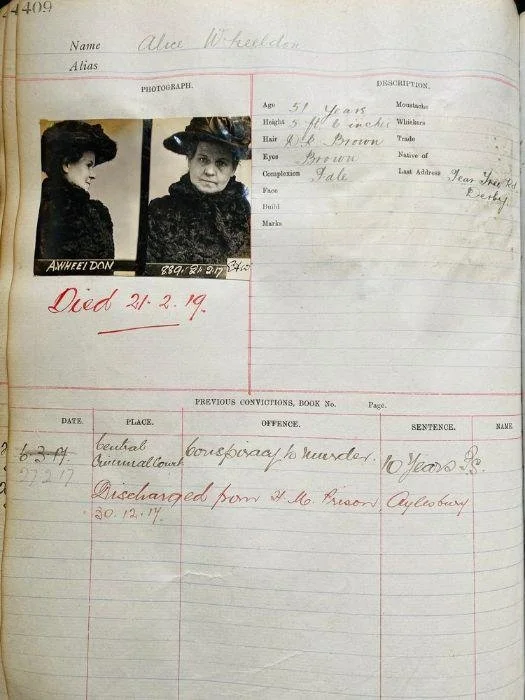
After the replacement of an ill juror and the restarting of the trial, Alice, Winnie and Alfred were convicted on 10 March 1917. Alice was sentenced to ten years’ penal servitude, Alfred Mason to seven years and Winnie Mason to five years. Hettie was acquitted. Leave to appeal was refused on 2 April 1917.
Alice and Winnie were imprisoned at Aylesbury; Alfred Mason at Brixton. Already in poor health, Alice went on hunger strike and was force-fed. She was later transferred to Holloway Prison. In failing health, she was released on licence on 31 December 1917. She died in February 1919 during the influenza pandemic.
Alice Wheeldon’s grave in Nottingham Road Cemetery was not marked at the time of her burial, reportedly because there were concerns it might be defaced. It remains unmarked to this day.
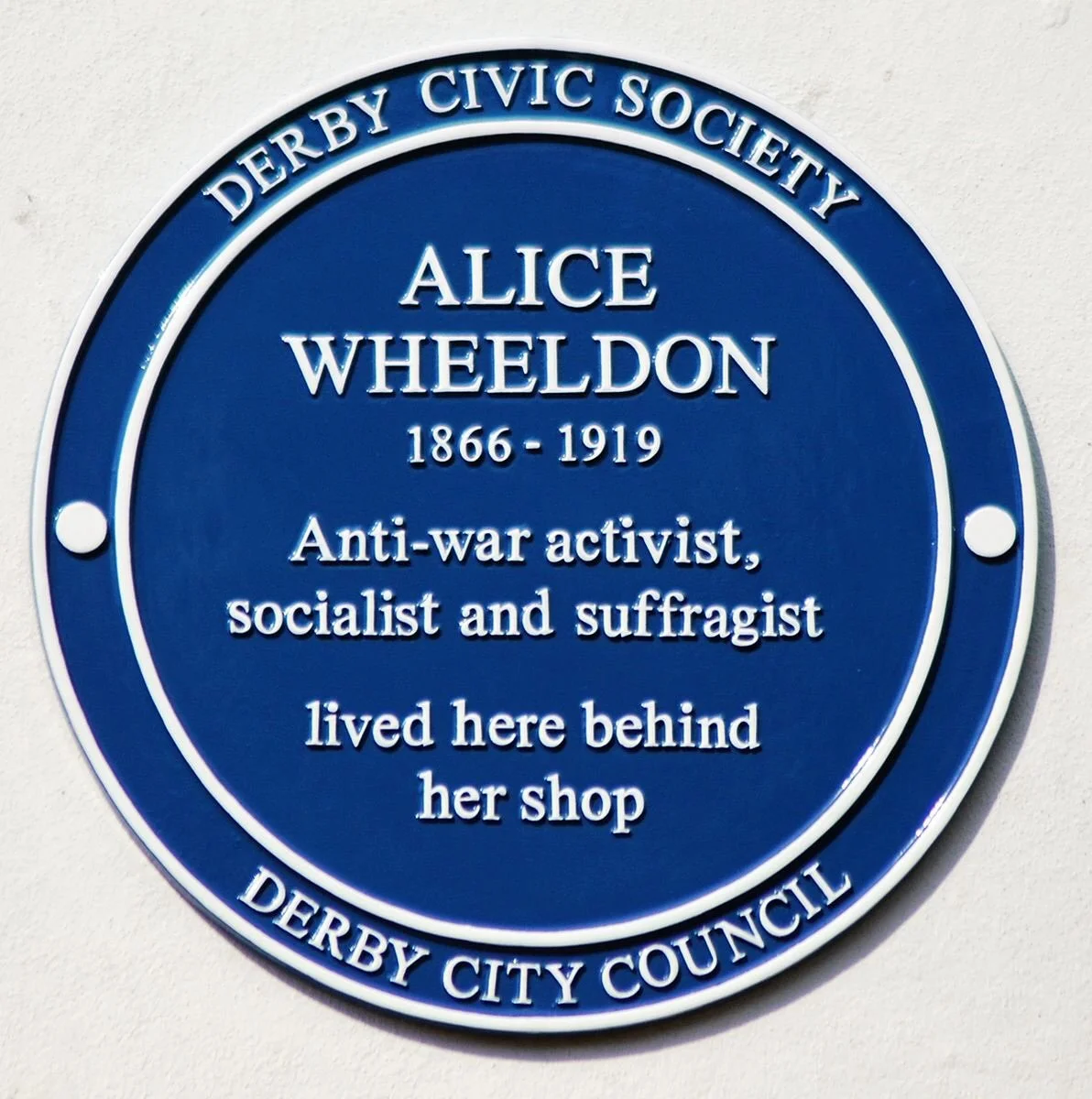
In 2013 Derby City Council and Derby Civic Society erected a Blue Plaque at 12 Pear Tree Road, Normanton, where she had lived and worked, recognising her place in Derby’s history.
CCRC Update
Following the establishment of the Criminal Cases Review Commission (CCRC) in 1995, members of the family began preparing an application to have the convictions formally reviewed. An application was submitted in November 2019 arguing that the trial had been unfair, particularly in relation to the role of the undercover agent known as “Gordon”, who was not called to give evidence, the replacement of a juror during the trial, and the admission of bad character evidence. In September 2021 the CCRC decided not to refer the case to the Court of Appeal, issuing its final Statement of Reasons in February 2022. While declining to refer the case, largely on grounds of public interest given the age of the convictions, the Commission acknowledged that the submissions might raise a real possibility that the convictions would be considered unsafe.
For further reading see: https://alicewheeldon.org/
Police Photograph Book, St. Mary's Gate, Derby, 1890-1920.