
PC62 John “Jack” York
1894–1967 | A Derby policeman, two families and a story reunited.
Introduction
The story of Police Constable John “Jack” York connects a Derby policeman, the artist Ernest Townsend, two families whose descendants were separated for generations, and a little girl who had almost been lost to family history.
John was cremated and his ashes were scattered at Markeaton Crematorium, but Nottingham Road Cemetery holds two important parts of his story. His daughter Stella Beresford Ellis, who died aged eight in 1930, is buried there with the maternal grandparents who raised her. Townsend, who painted John’s striking portrait, is also buried there.
The story emerged through nearly 50 years of family research, mysteries, dead ends and research “brick walls”, followed by modern DNA testing and the comparison of evidence held by different branches. Peter York, Debra Jarrett, Maria Page and Michelle brought together family memories, documents, newspaper reports and photographs. Their combined work has allowed a complicated story hidden for about a century to be told with the agreement of both sides of the family.
Early life, army service and arrival in Derby
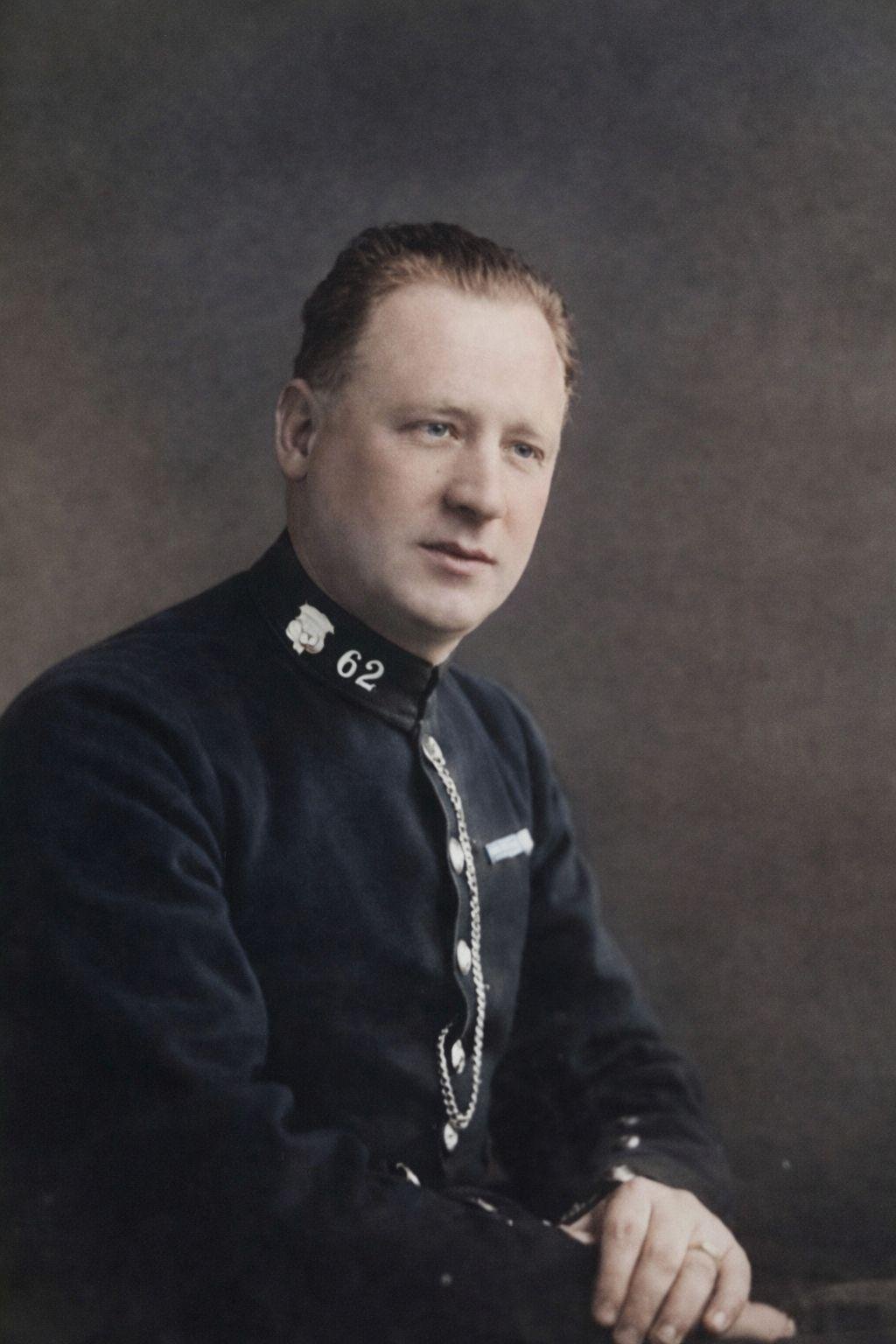
John York was born in Northamptonshire on 2 August 1894. His Derby Borough Police personal record gives his date of birth and records four years’ service in the Royal West Surrey Regiment before his police career. After military service during the First World War, he joined Derby Borough Police on 18 May 1920, aged 25, and received warrant number 62.
John had married Mabel, and they had three children in Northamptonshire: Jack, born in 1915; Barbara, born in 1921; and Arthur, born in 1924. John’s new job required him to live in Derby while Mabel and the children remained in Northamptonshire.
The 1921 census places the 27-year-old John as a boarder at 26 Arthur Street, Derby, in the home of James and Mary Ellen Ellis and their daughter Alice. John and Alice formed a long-term relationship while he was still married to Mabel. They had three children: Stella, born in 1921; Vic, born in 1923; and Keith, born in 1927. The sequence of the six children’s birth years shows that John’s Northamptonshire and Derby family lives overlapped for several years.
Two families
Because John remained legally married to Mabel, his relationship with Alice and the parentage of their three children were concealed within the family. Stella was raised as though she were the daughter of Alice’s parents, James and Mary Ellen Ellis. Vic and Keith were raised elsewhere within the wider family.
Vic and Keith grew up without knowing that they had been adopted, that they had a sister in Derby, or that they had three half-siblings in Northamptonshire. Vic, Debra’s maternal grandfather, learned the truth about his biological parents only when he needed his birth certificate to enlist during the Second World War. He was killed in Italy in 1945, near the end of the war, aged 21. His daughter Wendy, Debra’s mother, was only 18 months old. Keith lived into his eighties and later knew who his biological parents were.
The 1939 Register records John at 75 Sacheverel Street, Derby, with Alice. John was recorded as married and Alice as single, reflecting their legal position at the time.
Stella Beresford Ellis, 1921–1930
Stella Beresford Ellis was born in 1921 and died on 7 February 1930, aged eight. Although she was the biological daughter of John York and Alice Ellis, she was raised by Alice’s parents, James and Mary Ellen Ellis. Contemporary reports therefore described James as Stella’s father.
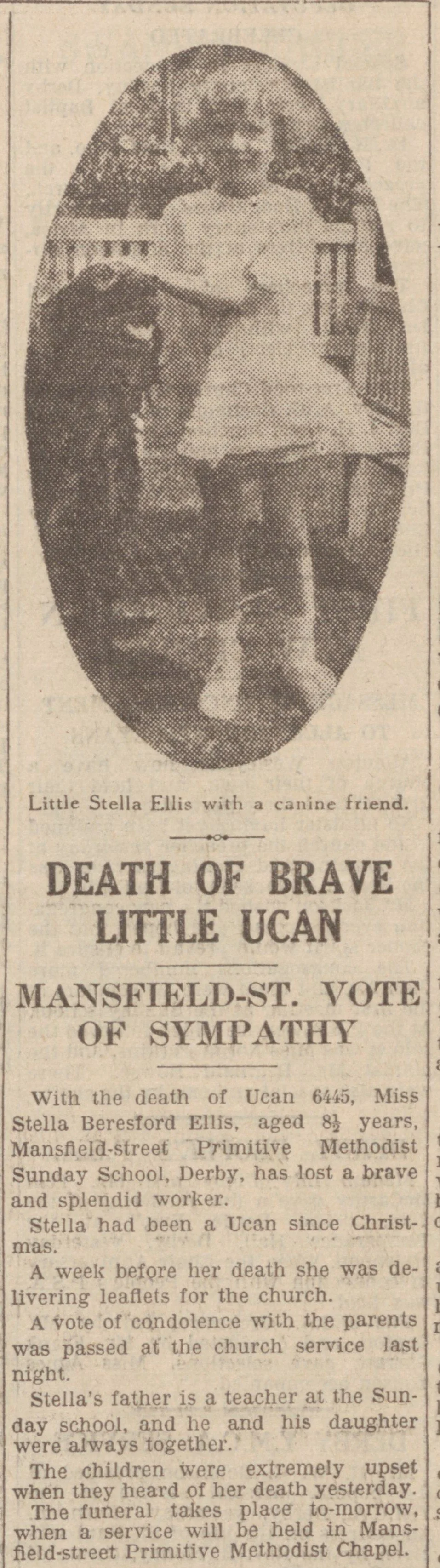
A Derby newspaper report headed “Death of Brave Little Ucan” described Stella as associated with Mansfield Street Primitive Methodist Sunday School and as “a brave and splendid worker”. She had been ill since Christmas, yet only a week before her death had been delivering leaflets for the church. The children were said to be extremely upset, and a vote of condolence with the parents was passed at the church service.
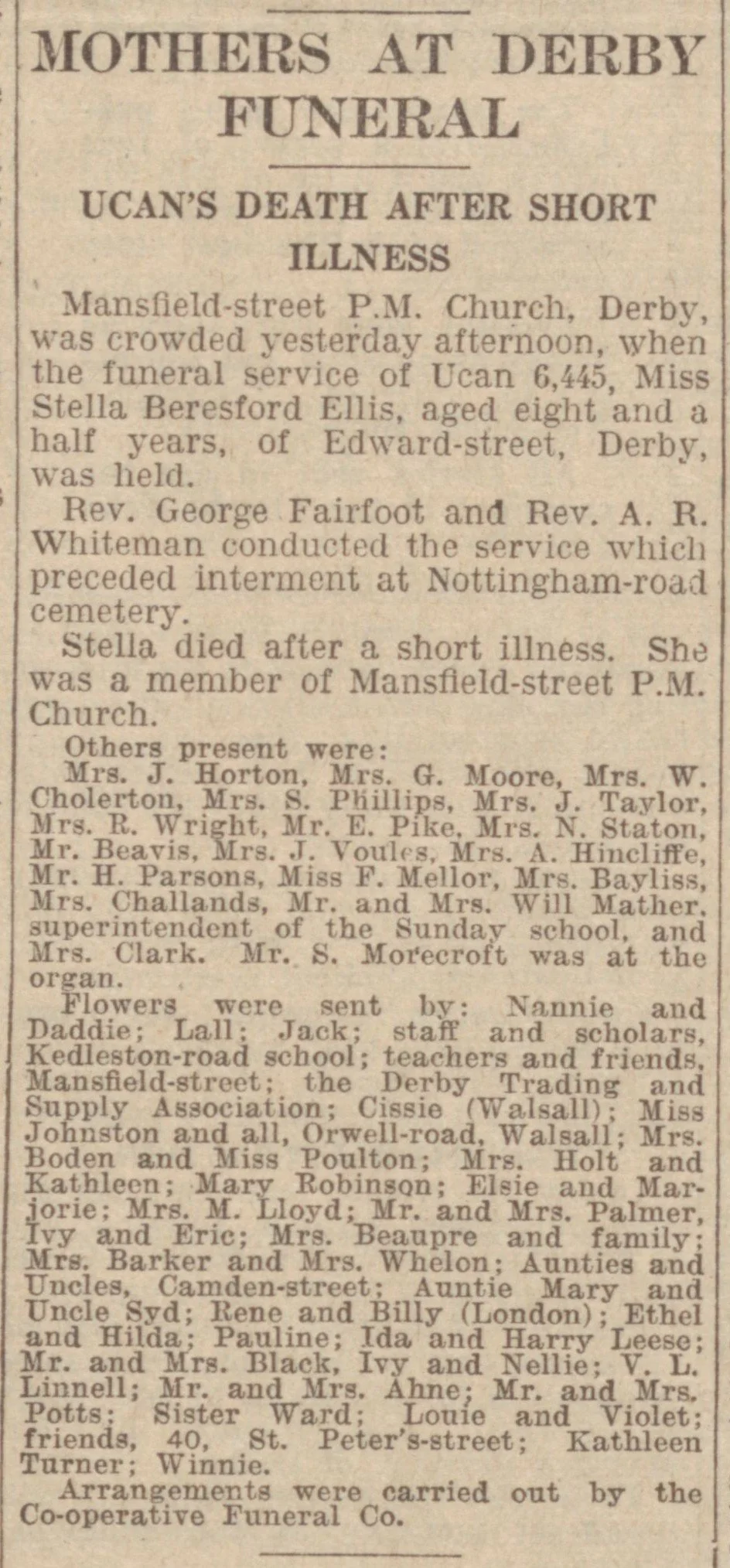
A separate death notice remembered “our dear little Stella” and said that her life had been “short and sweet”. It was placed by “Nanna, Lall and Jack” of 19 Edward Street, Derby. The Rev. George Fairfoot conducted Stella’s funeral. Contemporary funeral reporting, read alongside the death notices and cemetery records, helps explain how Stella was publicly understood within the Ellis household.
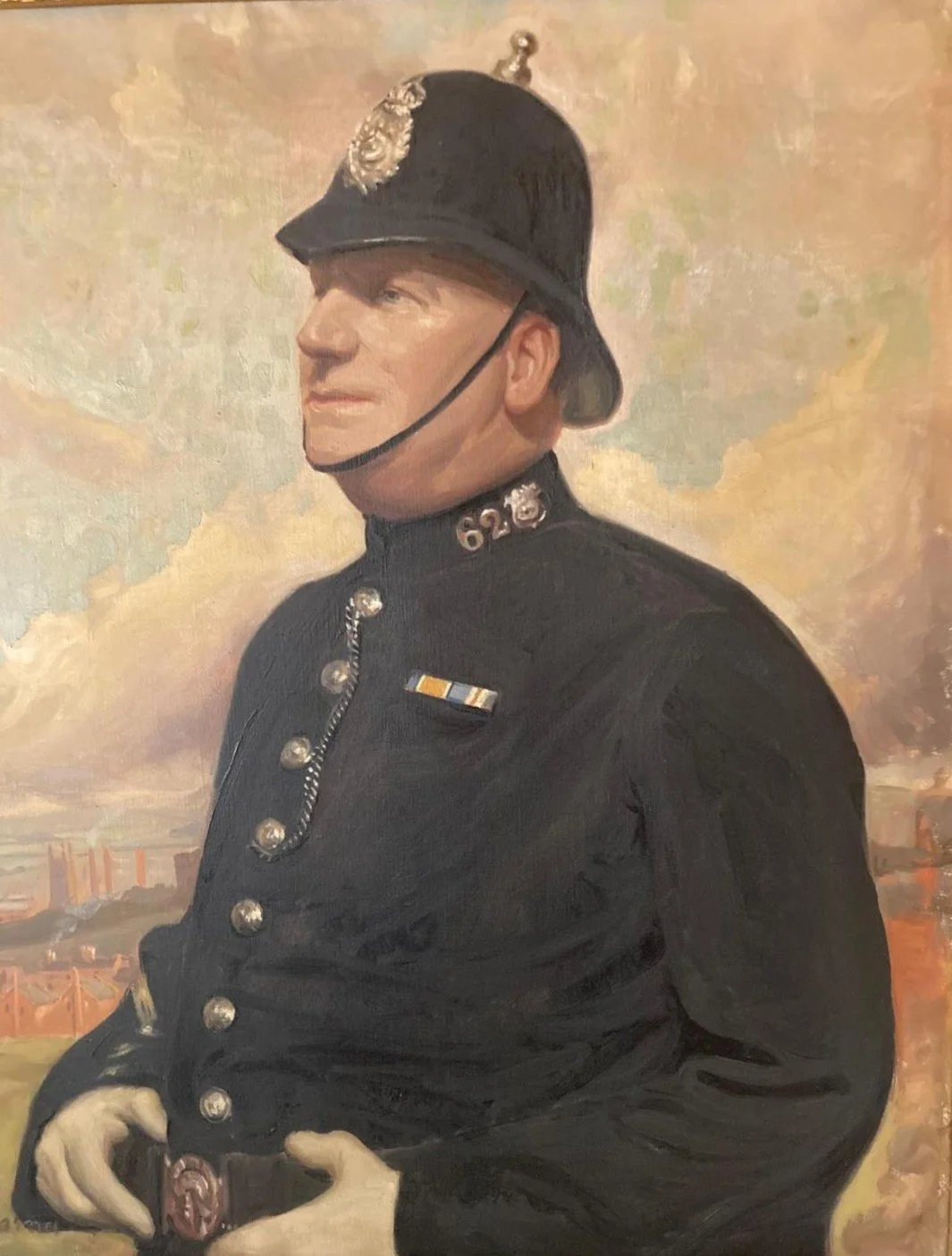
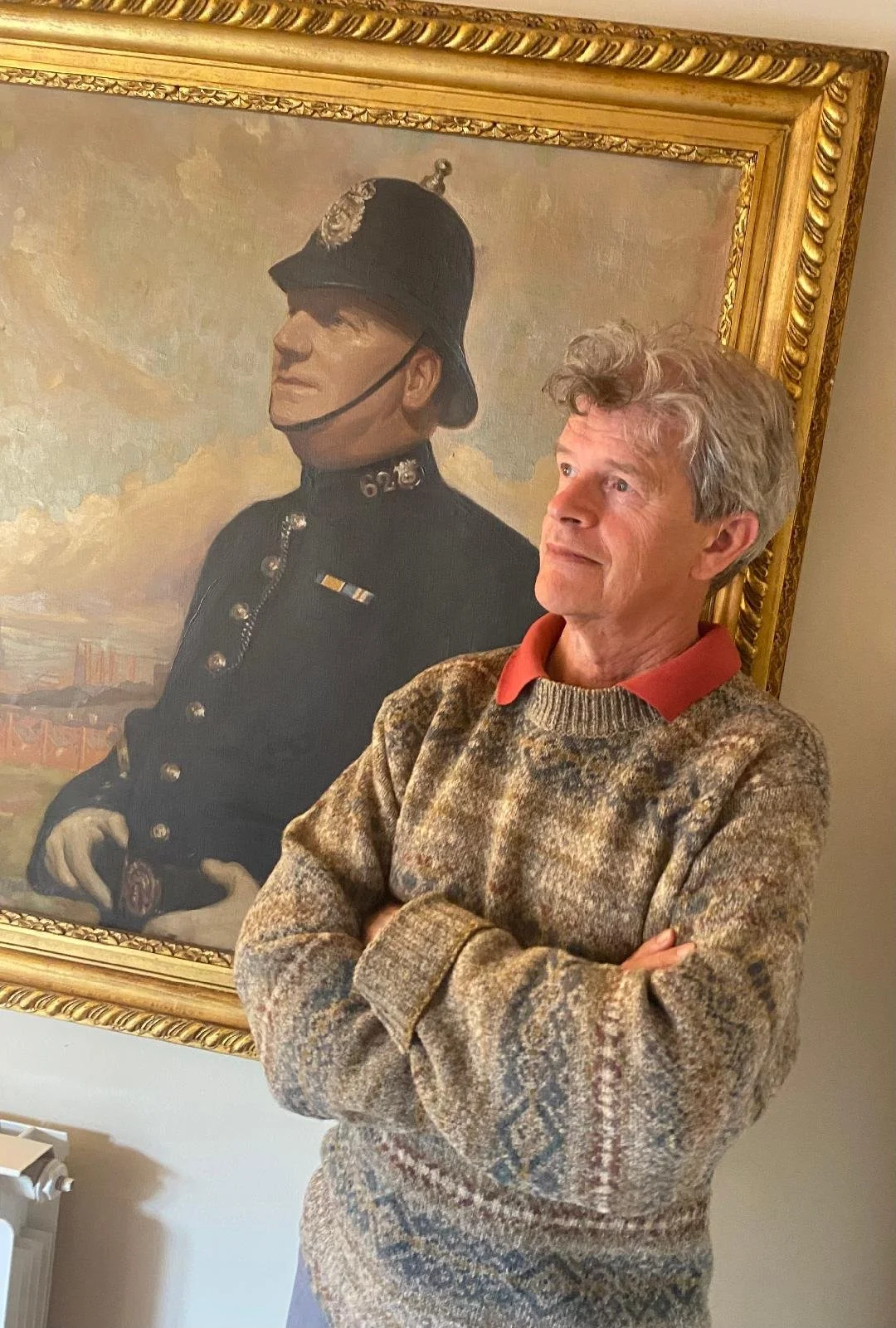
PC62 John “Jack” York in Derby Borough Police uniform, painted by Ernest Townsend. His collar number 62 is clearly visible; the industrial view behind him includes the Silk Mill area. The individual portrait remains undated and is privately owned.
What was a “Ucan”?
“Ucan” was not a Methodist term. It referred to the Derby Daily Telegraph’s children’s Ucan Club, whose name played on “You Can”. Members—called “Ucans” or “Ucanists”—promised to be helpful at home, cheerful and good-tempered, kind to animals, to perform an extra kindness each Friday and to believe they could do something worthwhile if they tried.
The report said Stella had been a Ucan only since Christmas. The affectionate headline therefore identified her as one of the newspaper club’s own young members, adding a poignant detail to the record of her short life.
The cemetery records and Stella’s grave
The Nottingham Road Cemetery burial registers place Stella, James Ellis and Mary Ellen Ellis together in grave 70435. The records identify James’s occupation as Printer. James died later in 1930, and Mary Ellen died in 1938. The cemetery burial entries, subsequently shared with the family by The Friends, also show that Mary Ellen was living with John and Alice when she died.
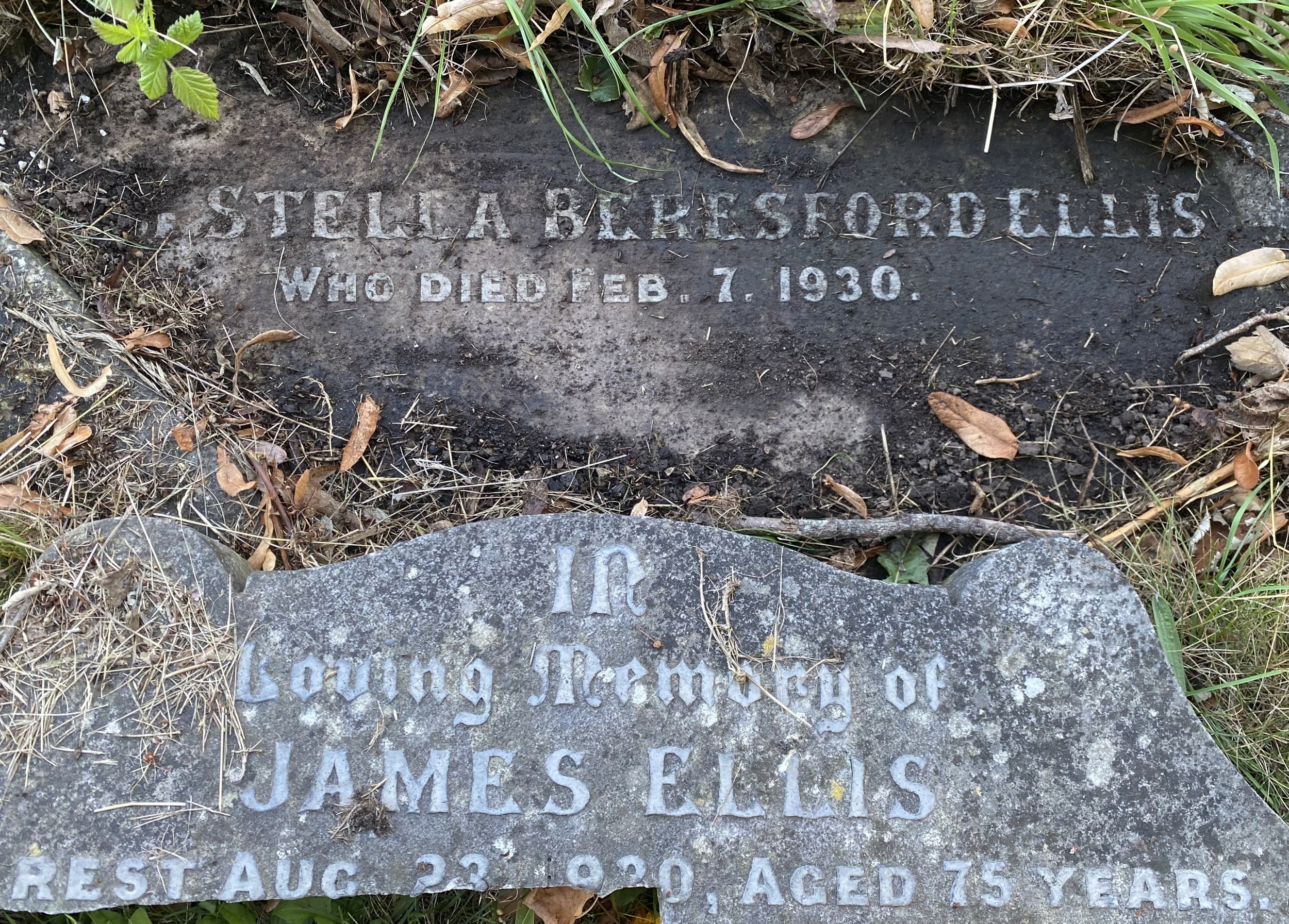
The original memorial had broken and Stella’s name was no longer evident when the grave was first located. During the investigation of the grave, a surviving fragment bearing her name and date of death, 7 February 1930, was found among the broken stone. Debra retained this important piece of the original memorial.
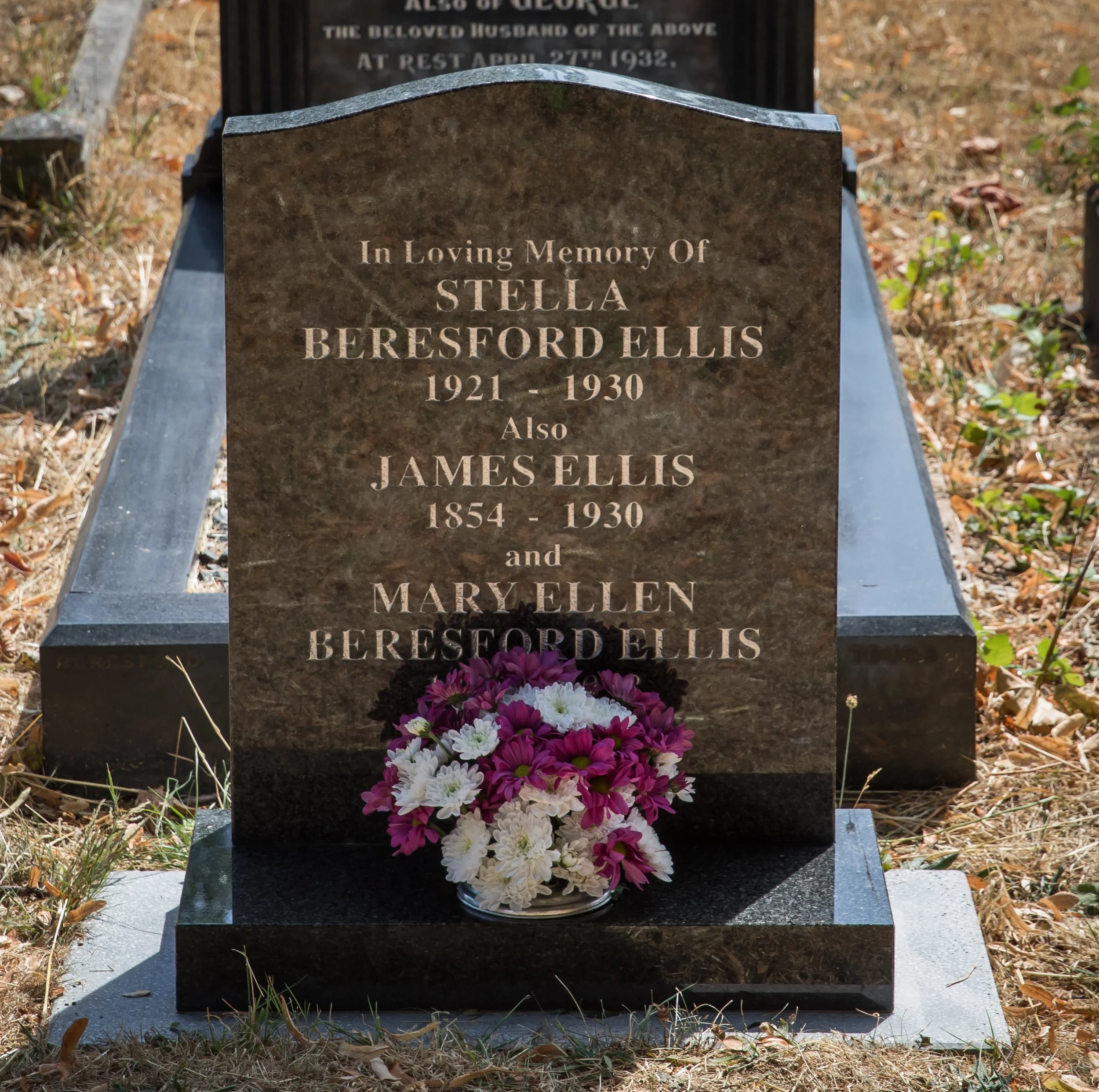
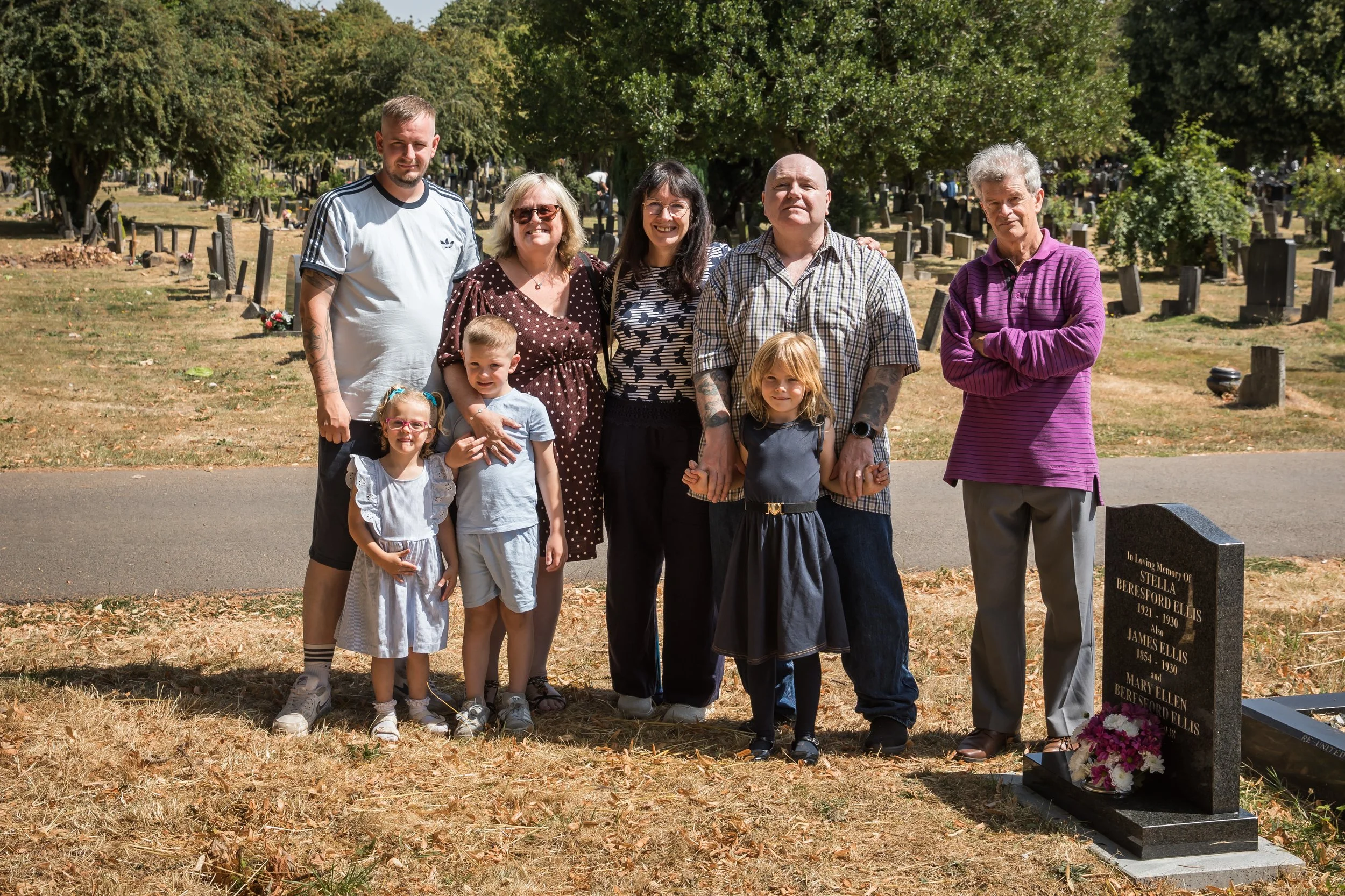
The grave was subsequently restored with a new stone commemorating James, Mary Ellen and Stella. The grave is now legally held by Debra, Vic’s granddaughter. Peter, Arthur’s son, helped to fund the restoration. A descendant of John’s first family had therefore helped preserve the grave of a child whose existence that branch had not known about for generations. The restored grave became both evidence and a meeting place for the reunited family.
A career with Derby Borough Police
John’s police record traces a 25-year career. After joining on 18 May 1920, he was attached initially to “A” Division. On 15 May 1921 the Watch Committee commended him and Sergeant Barrington and awarded John a gratuity of 10 shillings for meritorious conduct at a fire at 44 and 45 Queen Street on 24 February 1921.
On 30 November 1930 he received a second commendation, this time from the Bench, for his actions with PC Ernest Baxter in a case involving an attempted motor-car theft. His record also shows service in the Criminal Investigation Department, a return to street patrol and a final transfer to the Administrative Department and Police Stores. It records the award of his “first additional increment”.
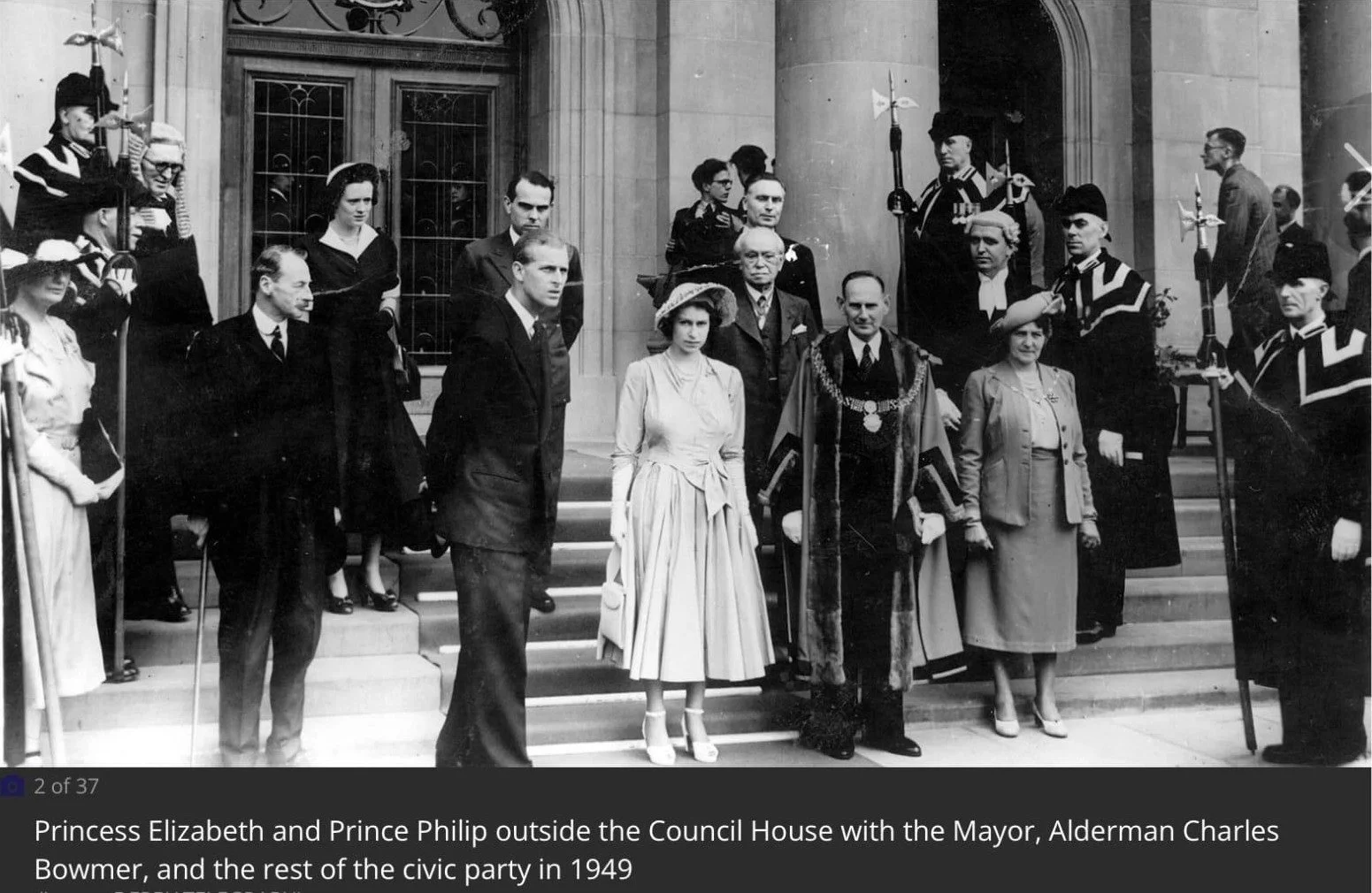
John also performed important ceremonial duties in Derby. His funeral notice records that he “carried the silver mace” for the future Queen’s visit to Derby as Princess Elizabeth in 1949, for her visit as Queen in 1957, and at a memorial service at Derby Cathedral for King George VI. John can be seen in the image below to the left of Price Phillip, holding a walking stick.
Retirement through ill health
After 25 years’ service, John applied to retire in 1945 because of failing health. His handwritten application referred to a pension of half his maximum rate of £6 a week—£3 per week.
A medical certificate dated 13 July 1945 records an examination on 10 July. John’s blood pressure was 170/104, probably due to chronic nephritis, and the doctor considered him unfit for patrol duties. John retired on medical grounds on 1 August 1945.
Ernest Townsend and PC62 York
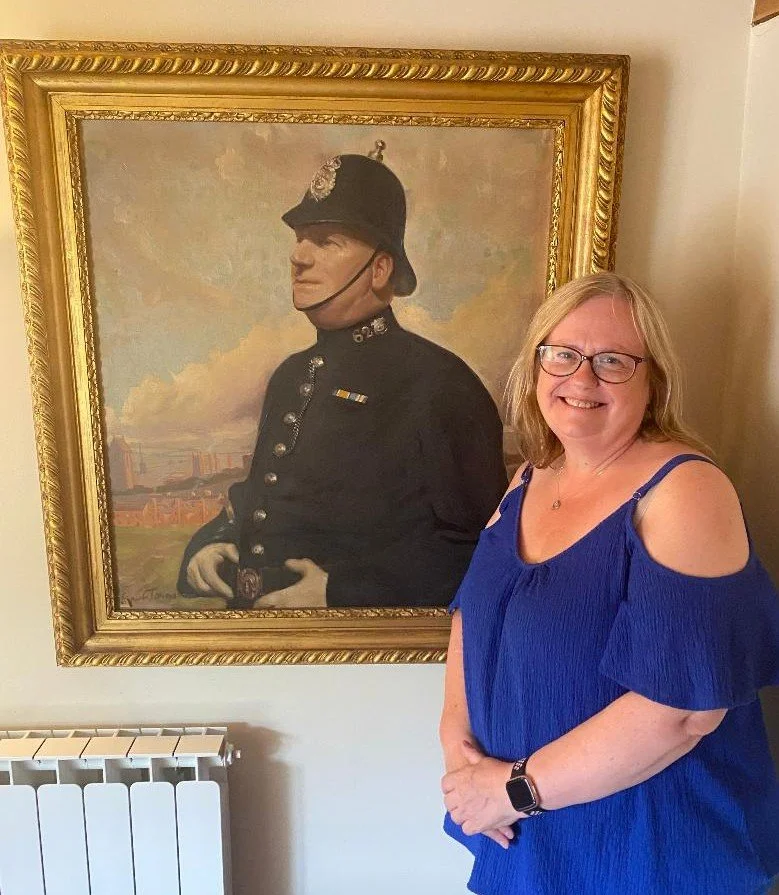
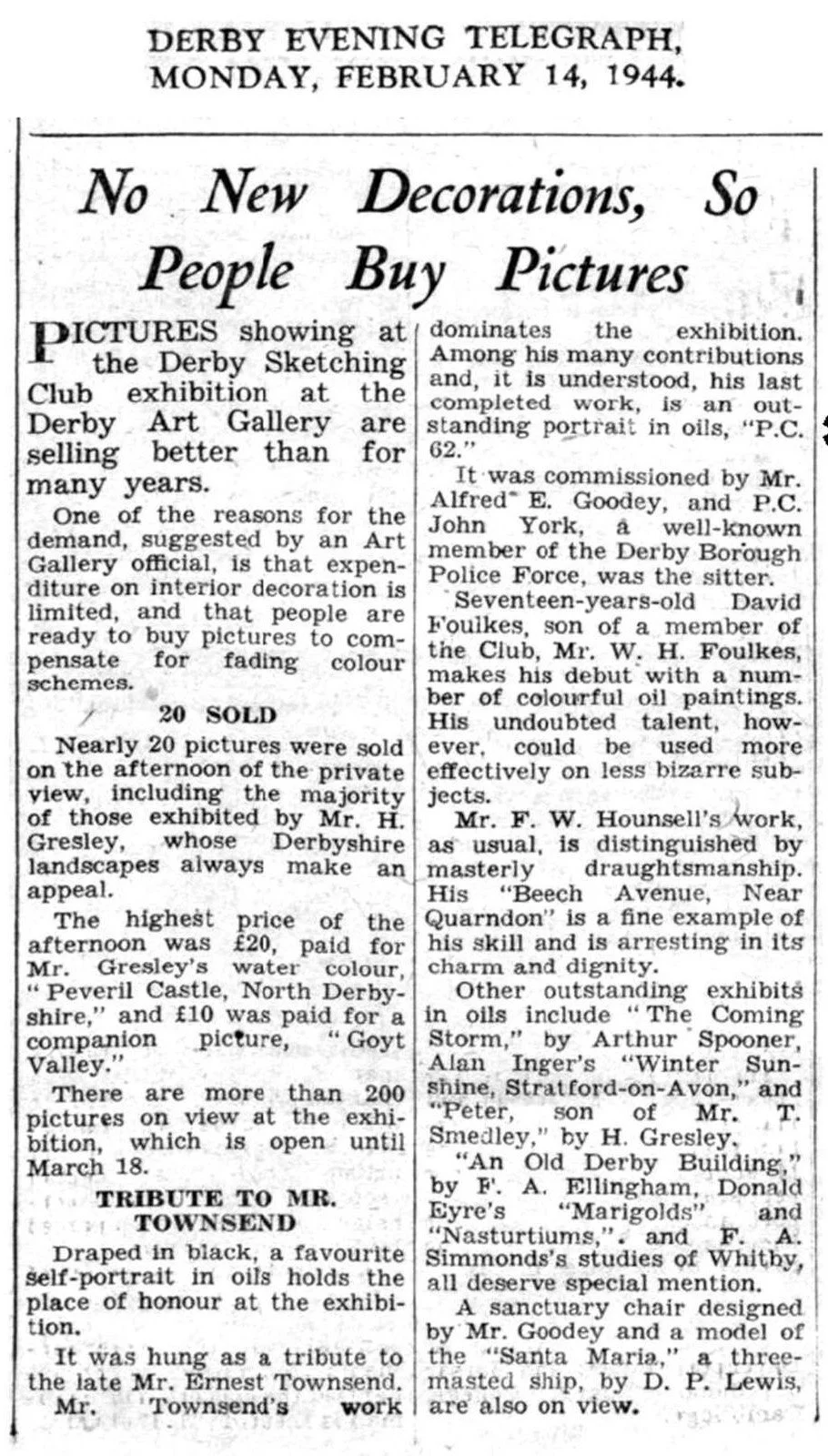
One of the most remarkable records of John is the large oil portrait painted by Derby artist Ernest Townsend. John is shown in Derby police uniform, his collar number 62 clearly visible, against a Derby industrial landscape. The exact date of the individual portrait has not been proved. However, a Derby Evening Telegraph article published on 14 February 1944 described “P.C. 62” as, it was understood, Townsend’s last completed work.
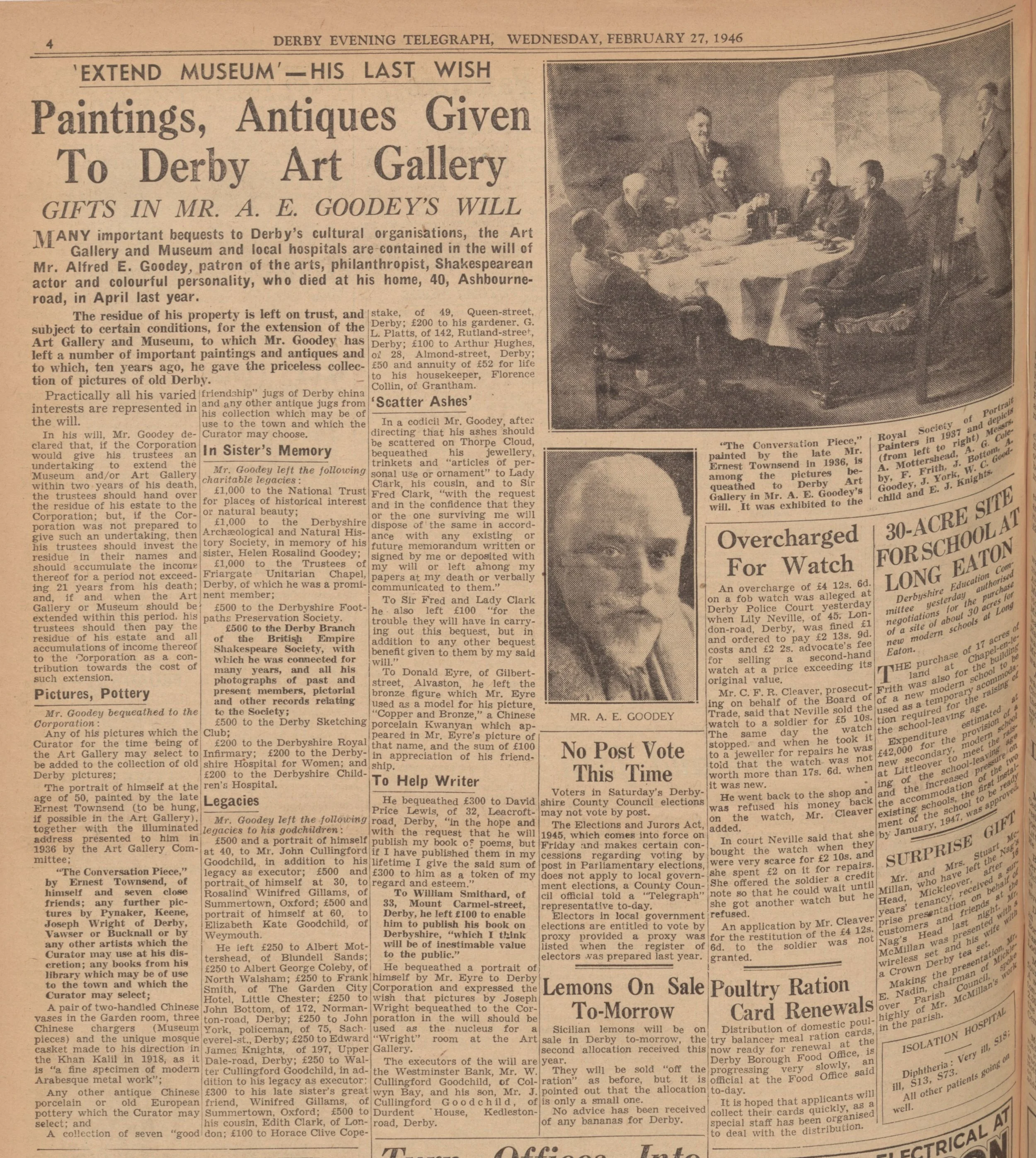
There is firm evidence that John knew Townsend by the mid-1930s. John appears in Townsend’s group painting “The Conversation Piece”. The catalogue for the Ernest Townsend Memorial Exhibition, held at Derby Corporation Art Gallery from 7 October to 2 December 1944, lists it as catalogue number 44. It records that A. E. Goodey commissioned the painting in 1936, names the eight sitters—including “J. York”—and notes its exhibition at the Royal Society of Portrait Painters in 1937.
A newspaper article published on 27 February 1946 reproduced the painting and again identified J. York among the sitters. Together, the 1944 catalogue and the later article demonstrate that John’s connection with Townsend extended beyond the individual police portrait. The family believes John’s posting at Full Street Police Station may also have placed him near Townsend’s studio on Full Street, although that remains a reasonable possibility rather than a documented explanation of how they met.
Townsend died in 1944 and is buried at Nottingham Road Cemetery. The artist who preserved PC62 York’s likeness therefore rests in the same cemetery as John’s daughter Stella.
John and Alice finally marry
John remained legally married to Mabel until her death. In April 1960, when he was a widower, he and Alice married. They lived in Swinburne Street, Derby.
John died on 9 January 1967, aged 72. He was cremated and his ashes were scattered at Markeaton Crematorium. Alice later moved to a two-bedroom flat in Webster Street, Derby. She died in June 1986, aged 82, and was also cremated. Her ashes were scattered close to John’s, further along the path. Funeral records and family information show that their youngest son arranged Alice’s funeral.
Nearly 50 years of family research
The eventual discovery did not begin with DNA. Maria Page, Jack’s granddaughter and John and Mabel’s great-granddaughter, began researching the family in the 1970s. Over the following decades she encountered mysteries, dead ends and research “brick walls” that could not then be resolved.
When Alice died in 1986, her will left John’s portrait by Townsend to his son Jack.
Maria’s father was asked to view it in Derby, but before he could travel Jack decided not to keep it and sold it to Derby Art Gallery for “a few hundred pounds”.
After Jack died in 1989, the Gallery invited his family to see the portrait. Several relatives visited and were struck by the likeness between John and Jack, prompting Maria to renew her efforts to discover more about her great-grandfather’s Derby life. Whether John commissioned the portrait or Townsend gave it to him is unknown.
On the Derby side, Michelle, Keith’s granddaughter, also carried out extensive family research. After the two family branches were connected and had discussed the portrait, she searched for it, contacting Derby Museum and Derbyshire Police Museum in Buxton, but neither could locate it.
A family rediscovered through DNA
Peter York, John and Mabel’s grandson through their son Arthur, knew that his grandfather had left his Northamptonshire family to live in Derby, but his branch did not know that John had formed another relationship and fathered three further children. On the Derby side, Wendy grew up believing that the couple within the wider family who had raised Vic and Keith were her biological grandparents. Her father Vic had been killed when she was only 18 months old.
After Debra, Vic’s granddaughter, submitted her DNA to Ancestry, Peter contacted her and explained how the two families were related. Peter also made contact with Michelle and her father Michael. The DNA matches supplied the missing links that earlier research alone had been unable to prove.
Peter, Debra, Maria and Michelle compared what the different branches knew and brought together family memories, documents, newspaper reports and photographs. Newspaper evidence, police papers, census and register entries, funeral material, cemetery records, the Townsend portrait and modern DNA evidence could then be read together rather than as isolated fragments.
Debra was able to tell Wendy what had been discovered before Wendy died, aged 82, giving her answers about her family history. Almost 50 years after Maria began her research, descendants from the two branches now keep in touch. Their willingness to share the story allows John to be remembered not only as the uniformed policeman in Townsend’s portrait, but as a real and complicated individual whose decisions affected several generations.
The portrait rediscovered
After DNA research revealed that PC62 York was her great-grandfather, Debra asked the Derby Past and Present Facebook group whether anyone knew what had happened to Townsend’s portrait. Ernest Townsend’s grandson contacted her privately. The painting survives and is owned by a close friend of the grandson, who enabled members of the family to see it.
Debra and Peter were photographed beside the portrait: Debra as John’s great-granddaughter through the Derby family, and Peter as John’s grandson through his marriage to Mabel. The portrait became another physical focus for a family story that decades of research and DNA had finally reunited.
2 August 2026 – 132 years after John’s birth
On 2 August 2026, 132 years after John’s birth, descendants from his two families met at Stella’s grave—the resting place of the little girl who links their histories. Four generations were represented.
Family Tree - simplified for this article.
Relationship
John and Mabel
Children:
Jack (born 1915), Barbara (born 1921) and Arthur (born 1924).
Maria Page, Jack’s granddaughter, is John and Mabel’s great-granddaughter; Peter York is their grandson through Arthur.
John and Alice
Children:
Stella Beresford Ellis (1921–1930), raised by Alice’s parents, James and Mary Ellen Ellis, and buried with them in grave 70435.
Vic (born 1923) and Keith (born 1927). Vic was Wendy’s father and Debra’s maternal grandfather; Michelle is Keith’s granddaughter.
Alice’s parents
James Ellis (1854–1930), a Printer, and Mary Ellen Beresford Ellis (1861–1938). They raised Stella and share grave 70435 with her.
Acknowledgements and sources
This biography was reconstructed collaboratively from information and material shared by Peter York, Debra Jarrett, Maria Page and Michelle. Their contributions include decades of family research, DNA evidence, family memories, documents, newspaper reports and photographs.
Additional sources include Derby Borough Police records and retirement papers, the 1921 census and 1939 Register, Nottingham Road Cemetery burial registers, contemporary newspaper reports and notices, funeral material, family photographs, the 1944 Ernest Townsend Memorial Exhibition catalogue and Townsend’s surviving artwork.
The Friends thank both family branches for allowing this difficult but important story to be told, the portrait’s owner for enabling the family to see it, and Derby City Council Bereavement Services for assistance with cremation records and scattering areas.